
Sapria himalayana
Sapria himalayana
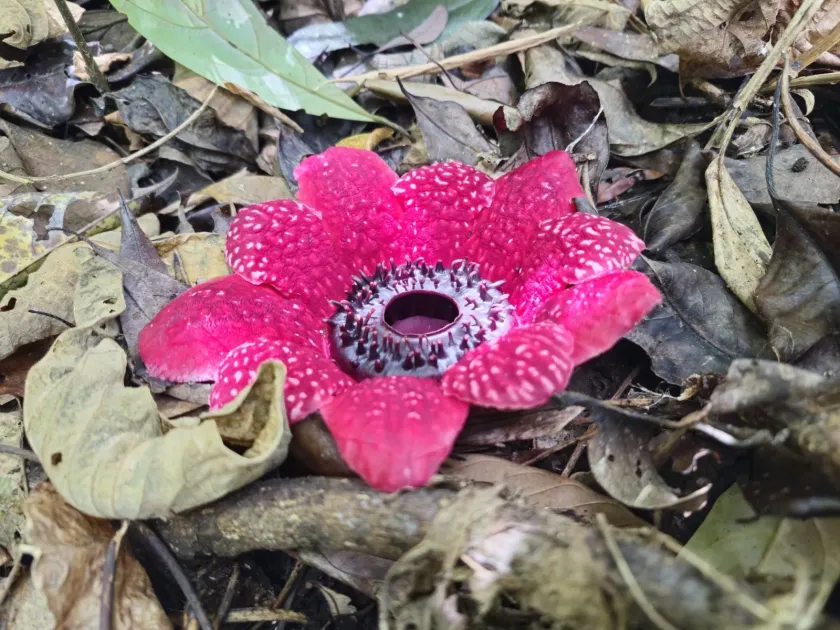
Description
Growing requirements
Sapria himalayana is an extraordinary parasitic plant belonging to the Rafflesiaceae family. It is not an agricultural crop in any conventional sense, as it is an obligate parasite that lacks chlorophyll and derives all its nutrients from the host plant, specifically vines of the genus Tetrastigma.
The native distribution of this species spans the Himalayan region, including parts of India, Thailand, Vietnam, and Southern China. It thrives in dense, humid tropical and subtropical rainforests where the host vines are abundant and the microclimate remains consistently warm and moist.
Botanically, the plant is mostly vegetative tissue residing within the host's stems or roots. It manifests externally only during the flowering stage, producing a large, fleshy, red flower characterized by creamy-white warts, which serves as the primary reproductive structure of the organism.
Regarding environmental requirements, the plant is strictly dependent on the health and ecological stability of the host's habitat. It does not require specific soil types or standard agronomic inputs like fertilizers, as its survival is tied to the internal physiology of the host vine.
There is no agricultural or industrial use for Sapria himalayana. Due to its complex symbiotic life cycle and requirement for specific host species, it cannot be cultivated in nurseries or greenhouses, making it a subject of strict conservation focus rather than economic cultivation.
Main diseases and pests
The primary threat to Sapria himalayana is the loss of natural forest habitats. As human activities continue to fragment the tropical forests of the Himalayas and Southeast Asia, the populations of host vines are declining, directly endangering the existence of the parasite.
Scientific data on specific pests and diseases affecting Sapria is limited. In natural forest environments, flowers may fall prey to various insects or succumb to rot caused by fungal pathogens when exposed to excessively prolonged periods of high humidity and poor air circulation.