
Turnera ulmifolia
Turnera ulmifolia L.
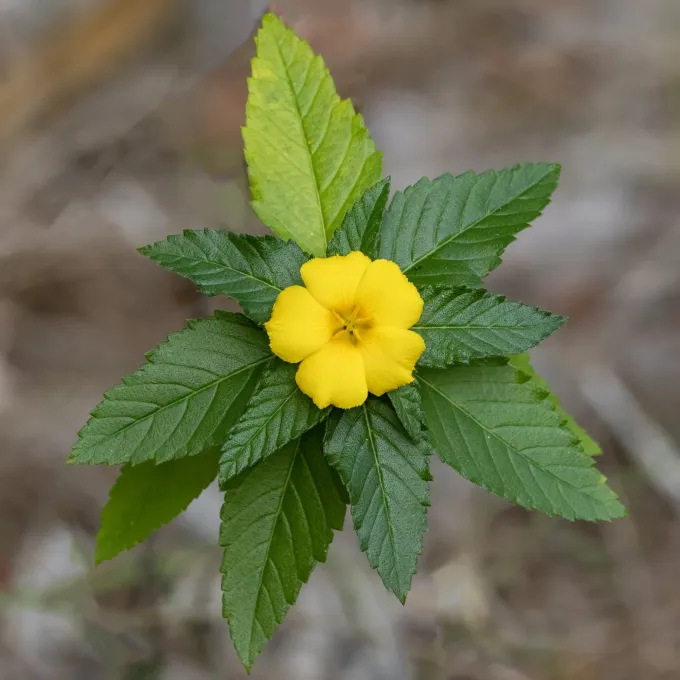
Description
Sowing dates
Seeds of Turnera ulmifolia should be sown in a warm, sheltered environment, ideally during late winter or early spring to maximize the growing season.
The seeds require light for germination and should be sown on the surface of a fine, moist potting mix without covering them too deeply.
A consistent temperature between 22 and 26 degrees Celsius is critical for high germination rates and the subsequent healthy development of seedlings.
Transplanting into individual pots should occur once the seedlings develop their true leaves to prevent root competition and crowding.
Acclimatization to outdoor conditions should be handled gradually to avoid shock when the plants are moved to their permanent growing location.
Growing requirements
This species thrives in full sun exposure, which is necessary to stimulate the characteristic blooming cycle of this tropical perennial plant.
Well-drained soil is essential to prevent root diseases; sandy loam substrates with organic matter added are generally the most productive.
Regular watering is recommended, but the soil must be allowed to dry slightly between sessions to maintain healthy root respiration.
Fertilization with a balanced NPK fertilizer during the growth phase encourages more vigorous vegetative development and floral production.
The plant is highly sensitive to frost and cold drafts, making it essential to keep the environmental temperature well above freezing at all times.
Main diseases and pests
Spider mites are the most common pest, particularly in greenhouses where humidity levels might fluctuate or remain too low for extended periods.
Powdery mildew can infect leaves during humid and stagnant conditions, appearing as a dusty white coating that reduces photosynthetic capacity.
Overwatering often triggers root rot, which is characterized by yellowing leaves and a general decline in the plant's overall vigor.
Regular monitoring of leaf undersides and maintaining good air circulation are the primary strategies for preventing common pest outbreaks.
If chemical interventions are necessary, organic-based horticultural oils or specialized fungicides are effective if applied during the early onset of symptoms.