
Sabia lanceolata
Sabia lanceolata
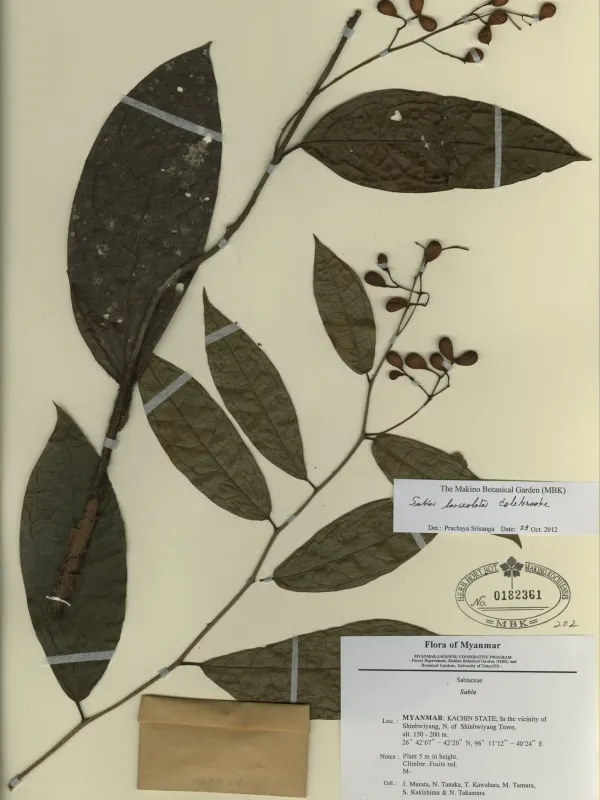
Description
Growing requirements
Sabia lanceolata is a woody vine or shrub belonging to the Sabiaceae family. This plant is biologically adapted to the humid conditions of tropical and subtropical forests in Southeast Asia, where it thrives in diverse ecosystems.
Optimal growth requires consistently high temperatures and elevated air humidity levels. The plant prefers partially shaded areas protected from direct, intense midday sun, mimicking its natural habitat in the forest understory.
Soil requirements include well-draining, nutrient-rich substrates with a slightly acidic to neutral pH level. The species is sensitive to waterlogging, necessitating excellent drainage management to prevent root system distress.
A key biological feature of this species is its ability to grow vertically when provided with suitable support. The leaves are lanceolate, as the name suggests, and the fruit develops as a drupe with a specific maturation cycle.
In agricultural practice, this species is not typically grown as a major commercial commodity but is often valued in botanical collections or sustainable agroforestry systems for its natural pest resistance.
Main diseases and pests
The primary threats to Sabia lanceolata include fungal infections resulting from poor aeration and excessive soil moisture. Waterlogging often leads to root rot, which is difficult to manage once the infection has progressed significantly.
Regarding pests, various leaf-eating insects and spider mites pose the greatest risk, especially in environments with low air humidity and high heat, which favor rapid population growth.
Disease prevention is best achieved through regular thinning of the canopy or vines to ensure adequate light exposure and air circulation, both of which are critical for preventing mold and fungal outbreaks.
The use of biological insecticides during the early stages of vegetation can significantly reduce the risk of infestation without causing negative impacts on the local ecosystem.
Regular monitoring of foliage health is recommended, as changes in leaf color or the appearance of spots are early indicators of nutritional imbalances or potential pathogen colonization.