
Sabia campanulata
Sabia campanulata
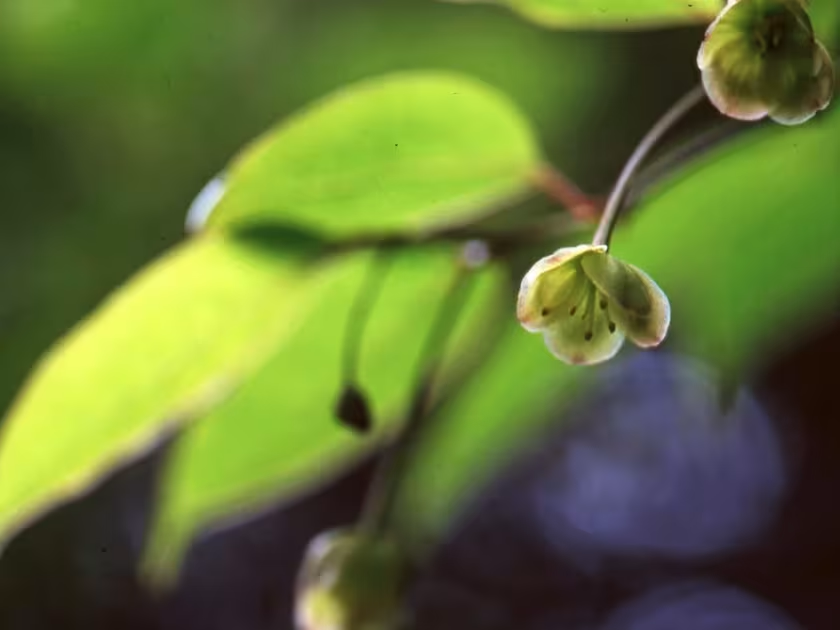
Description
Growing requirements
Sabia campanulata is a distinctive climbing plant belonging to the family Sabiaceae. Native to the mountainous regions of Asia, it is primarily valued for its unique bell-shaped flowers and attractive foliage that provides excellent ornamental value.
The plant requires deep, fertile, and well-drained soils to thrive. It performs best when planted in sites that offer protection from harsh winds and intense afternoon sun, preferring dappled light or partially shaded environments that mimic its natural habitat.
Regarding climate, this species prefers temperate conditions with moderate humidity levels throughout the growing season. While it exhibits some adaptability, extreme heat or prolonged drought can significantly impair its development and flowering capacity.
Effective agrotechnical practices for Sabia campanulata include regular watering to keep the soil consistently moist but never waterlogged. Incorporating organic mulch around the base helps stabilize soil temperature and improves overall soil structure over time.
In terms of хозяйственного использования (utility), the plant is primarily cultivated by botanical enthusiasts and landscapers as a specimen vine. Its growth habit makes it suitable for covering trellises, arbors, and other vertical garden structures in protected areas.
Main diseases and pests
Root rot remains the most serious threat to the vitality of Sabia campanulata, typically caused by waterlogged substrates or poor drainage systems. Avoiding excess moisture during dormant periods is critical to maintaining plant health.
Aphids and spider mites are the most common pests affecting this species, particularly in greenhouse conditions or when ambient humidity levels drop too low. Frequent inspection of the underside of leaves is recommended for early detection.
Powdery mildew can occur in stagnant air conditions where humidity is high but airflow is insufficient. Proper pruning to open up the canopy significantly reduces the risk of fungal outbreaks in dense plantings.
Nematodes are potential soil-borne pests that can cause stunted growth. Using sterilized potting mixes and ensuring strict sanitation when introducing new specimens is a vital part of preventative maintenance for this crop.
Maintaining a healthy environment through proper pruning and irrigation management is the best defense against threats. Regular monitoring ensures that any disease or pest activity is addressed before it compromises the structural integrity of the vine.