
Mountain rue
Ruta montana
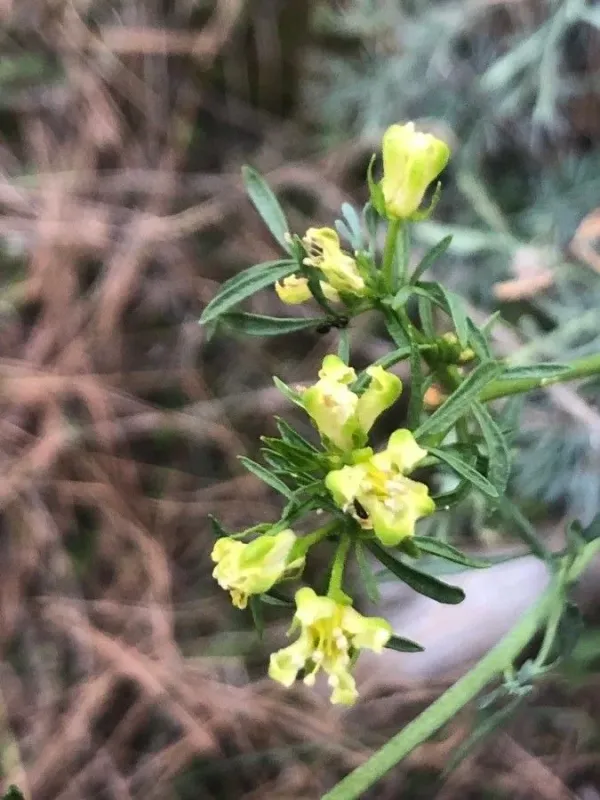
Description
Sowing dates
Mountain rue (Ruta montana) is a perennial subshrub belonging to the Rutaceae family, distinguished by its compact growth and unique essential oil profile.
Propagation is typically achieved through seeds, which are sown in late winter or early spring in a controlled environment like a nursery or greenhouse.
Seeds require proper stratification for uniform germination, and they should be sown on the surface or covered very lightly due to their need for light.
Once seedlings reach a manageable size, they are hardened off and transplanted into the field during the late spring season to avoid frost damage.
Successful establishment depends on maintaining consistent moisture levels for young plants until they develop a robust root system capable of handling drier conditions.
##requirements##This crop thrives in sunny locations with well-draining, slightly alkaline soil, as it is highly sensitive to waterlogging and poor aeration.
Mountain rue is well-adapted to Mediterranean-type climates, showing strong drought tolerance once established in the field environment.
Optimal growth occurs in temperatures ranging from 20°C to 28°C, with protection from harsh winter winds being necessary in colder temperate regions.
Soil preparation should focus on ensuring high drainage, often involving the incorporation of grit or gravel if the substrate is too heavy or clay-based.
Fertilization should be kept minimal, as mountain rue performs best in soils with moderate nutrient availability, avoiding high-nitrogen applications that lead to weak growth.
Yield
The economic value of mountain rue is tied to its biomass production for the essential oil industry and its use in medicinal preparations.
Yield stability is achieved by managing plant density, typically spacing plants 30-50 cm apart to ensure adequate airflow and light penetration for the canopy.
Proper harvesting timing based on the flowering stage is critical to maximizing the concentration of active secondary metabolites in the harvested tissue.
As a perennial crop, it offers the advantage of multiple years of harvest from a single planting, provided the field is managed correctly to ensure plant longevity.
Yields are typically reported in terms of dry weight of leaf and flower material, which is processed shortly after harvest to preserve the chemical integrity.
Main diseases and pests
Mountain rue is relatively robust, but it can be susceptible to fungal issues such as root rot if planted in poorly drained or overly acidic soils.
Pest management should focus on monitoring for aphids and spider mites, which can proliferate in dry conditions and damage the foliage.
Viral infections may be transmitted by sucking insects, making the control of vector populations an essential component of the integrated pest management plan.
Preventative measures include maintaining adequate distance between plants and avoiding overhead irrigation, which minimizes the risk of leaf diseases.
Early detection of pests or physiological stressors allows for targeted interventions, reducing the need for broad-spectrum chemical applications on the crop.
Harvesting
Harvesting is performed during the peak flowering phase when the essential oil content is highest to ensure the best possible quality of raw material.
The stalks are cut, and the material is transported immediately to a drying facility to prevent oxidation and the degradation of volatile essential oils.
Drying is conducted in shade under controlled airflow conditions, ensuring the temperature remains low to preserve the delicate aroma and chemical composition.
After the material is fully dehydrated, the leaves and flowers are separated from the woody stems, cleaned of debris, and prepared for industrial processing.
Care should be taken during the handling of fresh material, as some individuals may experience skin irritation upon contact with the plant's volatile oils.