
Ruschia canotata
Ruschia canotata
Description
Growing requirements
Ruschia canotata is a compact succulent shrub belonging to the Aizoaceae family. Native to the arid regions of Southern Africa, it has evolved to thrive in environments characterized by limited rainfall and high solar radiation.
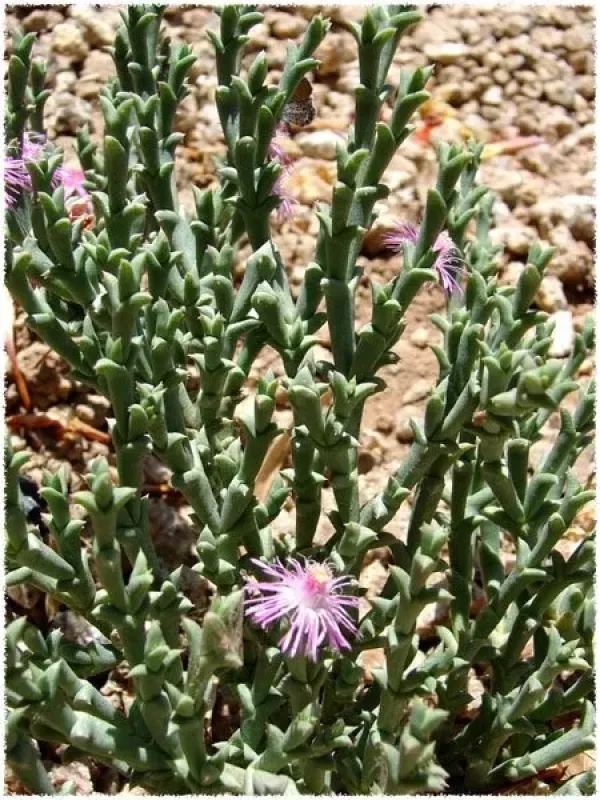
Botanically, the plant is distinguished by its fleshy, three-sided leaves which are typically covered in a fine, waxy cuticle. This feature is a primary adaptation to prevent dehydration and protects the plant against the intense sun typical of its habitat.
Optimal cultivation requires exposure to full sun to maintain the plant's natural morphology. Lack of sufficient light often leads to etiolation, where the plant loses its structural integrity and becomes prone to stem weakness.
The substrate must be highly porous and well-draining, as the species is extremely susceptible to root rot caused by waterlogged soil. A professional succulent mix incorporating pumice, grit, or coarse sand is recommended to ensure proper aeration.
Regarding moisture management, this culture requires a seasonal cycle of watering. During the active growing phase, it should be watered only when the soil has dried out completely, while the dormant season requires dry conditions to ensure long-term health.