
Rupicapnos numidica
Rupicapnos numidica
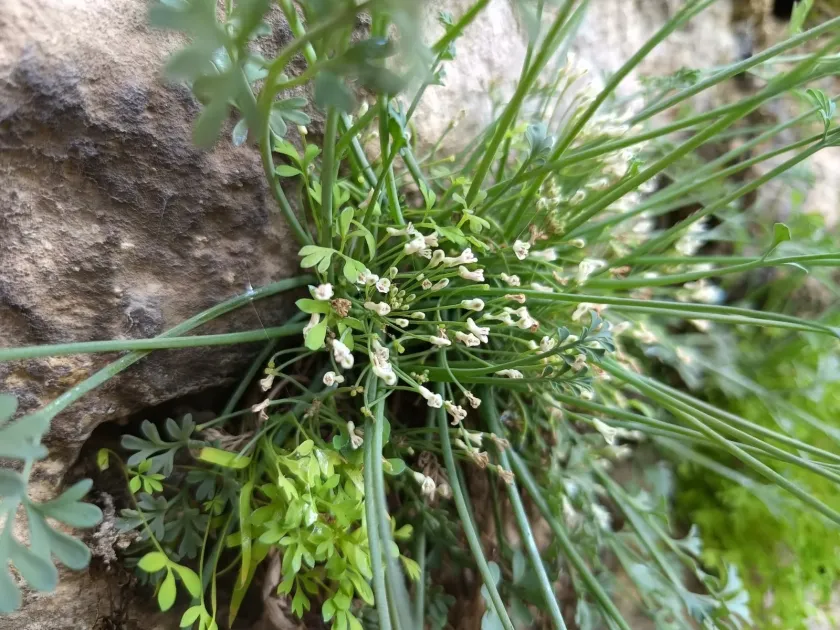
Description
Growing requirements
Rupicapnos numidica is a unique herbaceous plant species belonging to the Papaveraceae family. It is naturally found in the mountainous regions of North Africa, where it has adapted to life in rocky crevices and limestone substrates.
The morphology of this plant includes delicate, dissected foliage and flowers typical of the poppy family, specialized for survival in harsh, nutrient-poor conditions. It plays a niche role in its local ecosystem, often colonizing sites where other vegetation struggles to establish.
For successful cultivation, the plant requires well-draining soil that mimics rocky habitats. High mineral content and minimal organic debris in the soil profile are ideal for maintaining the health of its specialized root system.
Climate requirements include exposure to significant sunlight and a distinct dry-wet cycle. The plant thrives in temperate, high-altitude conditions, benefiting from good air circulation to prevent fungal pathogens that often affect succulents and mountain herbs.
In terms of agricultural and scientific interest, this species is mainly studied for its evolutionary adaptations and its genetic proximity to other important members of the poppy order. Understanding its ecological needs provides insights into preserving rare alpine and lithophytic flora.