
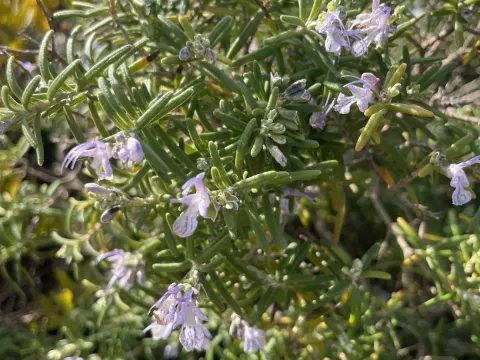
Rosemary
Rosmarinus
Rosemary (Rosmarinus officinalis) is a perennial evergreen shrub belonging to the Lamiaceae family. It is typically propagated vegetatively through cuttings, as the seeds have notoriously low and inconsistent germination rates.
What the section contains

Rosemary
In temperate climates, the transplanting of rooted cuttings into open soil should occur in the spring once the ground has warmed to approximately 15-18 degrees Celsius and frost risk is gone.
If starting from seed, sowing should take place in late winter (February-March) indoors using a light, well-draining substrate, combined with artificial lighting to ensure robust seedling development.
For commercial production, planting density should allow for 50-70 cm spacing between plants to ensure good airflow, which is critical for reducing humidity-related plant stress.
Autumn planting is feasible only in regions with mild, frost-free winters, where established plants can withstand the colder, wetter months without sustaining root damage.
Rosemary is a sun-loving species that thrives in well-drained, sandy or loamy soils with a neutral to slightly alkaline pH. It is highly susceptible to root rot in waterlogged conditions.
The plant requires significant light exposure to maintain its essential oil production and compact growth habit. Shady or humid environments often lead to leggy, weak stems and disease.
While rosemary is drought-tolerant once established, it needs controlled, moderate irrigation during the early growth stages to ensure the survival and vigor of the root system.
Improving drainage in clay-heavy soils is essential; adding gravel or sand to the planting site is a standard practice to prevent the root zone from becoming oversaturated.
Pruning is a fundamental aspect of rosemary cultivation. Regular trimming encourages lateral branching, prevents the bush from becoming overly woody, and improves the overall yield of the harvest.
The peak productivity of a rosemary plantation is generally observed between the third and fifth years of growth, provided that nitrogen-based fertilizers are applied sparingly.
On a commercial scale, growers can expect an average yield of 5 to 10 tons of fresh biomass per hectare, depending on local climate, soil quality, and planting density.
The essential oil content typically ranges from 0.5% to 1.5% by weight of the dried herb, making it a valuable crop for the fragrance and food additive industries.
Strategic harvesting during the peak flowering stage significantly maximizes the quality of the essential oils, which are the primary driver of the crop's market value.
Maintenance of the soil's micronutrient balance, specifically regarding iron and magnesium, is essential for maintaining high yield levels throughout the lifespan of the plantation.
Spider mites are the most common pest for rosemary, particularly in dry environments. They cause stippling on leaves and can quickly infest entire rows if not treated early.
Fungal diseases, such as powdery mildew and root rot, are the primary threats to crop health, usually occurring when airflow is poor or when the soil remains too damp for too long.
Preventative measures include removing debris from around the base of the bushes and ensuring that irrigation is applied to the soil rather than over the foliage of the plants.
Using organic treatments like neem oil or insecticidal soaps is recommended, as rosemary is a popular culinary herb that must remain free of synthetic chemical residues.
Regular monitoring for pests and diseases, combined with proper spacing to facilitate air circulation, remains the most effective strategy for maintaining a healthy and productive crop.
Harvesting is typically performed during the peak blooming phase, as this is when the concentration of volatile oils and aromatic compounds is at its highest level.
The harvest is executed by cutting the tips of the shoots, ensuring that a significant portion of the bush remains to allow for continued vegetative growth and future recovery.
Post-harvest handling is critical: the fresh material should be moved immediately to a processing or drying facility to prevent wilting and the loss of aromatic properties.
Drying must take place in dark, well-ventilated rooms at temperatures below 35 degrees Celsius to protect the integrity of the essential oils from heat and UV degradation.
Once dried to the correct moisture content, the rosemary should be stored in opaque, airtight containers to preserve its flavor profile for up to two years of storage.