
Rosemary
Rosmarinus officinalis L.
Description
Sowing dates
Rosemary (Rosmarinus officinalis L.) is a perennial, evergreen shrub belonging to the Lamiaceae family. In commercial agricultural production, it is typically propagated through vegetative cuttings to ensure the consistency of genetic traits.
Seed propagation is less common due to low germination rates and the slow initial growth of the seedlings. When seeds are used, they require stratification and should be sown in controlled greenhouse environments during late winter or early spring.
Transplanting into the field is carried out only after the danger of frost has passed. Seedlings are usually transferred to the soil at 60–80 days old, depending on the vigor of the plant development.
Standard planting patterns involve spacing rows 70–90 cm apart, with individual plants placed 40–60 cm apart. This density is chosen to facilitate mechanical field operations and ensure adequate airflow between bushes.
Field selection is critical: the crop requires excellent drainage. On land prone to waterlogging, raised beds must be constructed to prevent root rot, which is the primary cause of crop failure.
Growing requirements
Rosemary is a sun-loving crop that thrives in open, high-light environments. Insufficient sunlight leads to leggy growth and significantly reduces the concentration of volatile aromatic oils.
The ideal soil is sandy or loamy, well-draining, and slightly alkaline. Heavy clay soils are unsuitable, as they retain excess moisture, which leads to rapid root system decline and fungal pathogens.
The optimal temperature for growth ranges between +20°C and +25°C. While the plant is hardy, it struggles in regions where temperatures drop below -10°C, often requiring protective covering or winter housing in colder zones.
Irrigation should be managed carefully. Rosemary performs better under slightly dry conditions compared to over-irrigation. Drip irrigation systems are preferred to ensure controlled moisture delivery to the root zone without wetting the foliage.
Maintenance includes periodic inter-row cultivation to manage weeds and soil aeration. Excessive nitrogen fertilization should be avoided, as it promotes lush vegetative growth at the expense of aromatic quality and frost resistance.
Yield
The yield of rosemary is influenced by the age of the plantation, soil fertility, and climatic consistency. Yields generally increase during the first three years until the plant reaches full maturity.
In commercial conditions, an average yield of fresh green biomass ranges from 2 to 5 tons per hectare per season, depending on the number of harvest cycles performed.
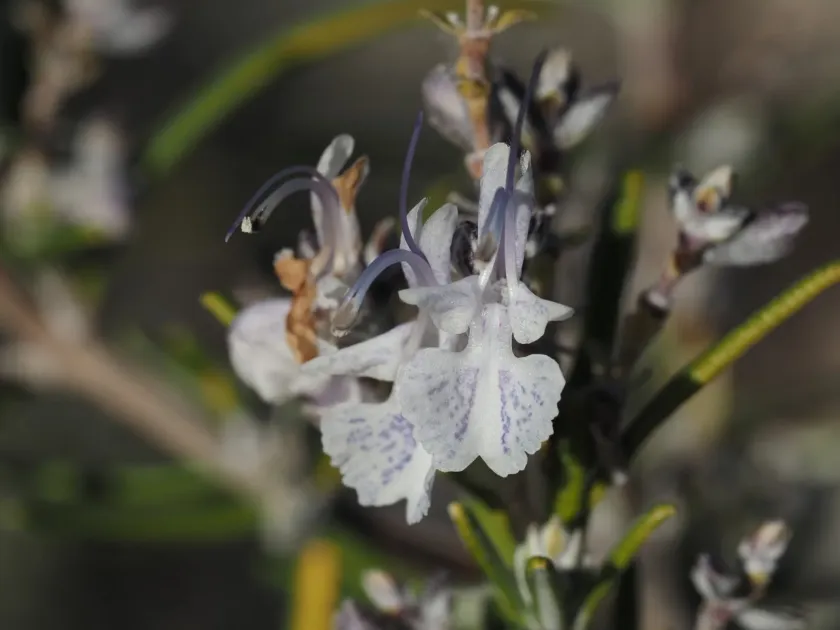
The concentration of essential oils reaches its peak during the onset of flowering. Therefore, timing the harvest to this biological phase is crucial for the economic efficiency of the crop.
A well-maintained rosemary field remains productive for 5–7 years. After this period, the plants become woody and less productive, necessitating the replanting of the field.
Effective management and the selection of high-oil-content cultivars are key factors in maximizing the quality and volume of the final output.
Main diseases and pests
Fungal diseases are the primary threat to rosemary plantations, particularly those caused by high humidity and poor air circulation within the shrub canopy. Issues like powdery mildew and root rot are common.
Common pests include spider mites, aphids, and scale insects. These pests feed on the sap of young shoots, leading to stunted growth, leaf discoloration, and decreased photosynthetic capacity.
Integrated pest management (IPM) strategies, including biological controls and targeted pesticide application, are recommended for managing infestations without damaging the plant's essential oil profile.
Good agricultural practices, such as proper spacing and strict irrigation control, are the first line of defense against diseases. Maintaining plant vigor is essential for natural resistance.
Regular field scouting is necessary to identify localized pest outbreaks early, allowing for spot treatments rather than widespread chemical application.
Harvesting
Harvesting usually begins in the second year of growth once the plants have established a solid root system and significant branching. Premature harvesting can weaken the plant.
The best time to harvest is at the start of the flowering period when the levels of volatile compounds and essential oils are at their absolute peak.
Cutting should be performed using sharp tools, harvesting only the green, non-woody portion of the branches to ensure the plant can regenerate for the next season.
Post-harvest, the material must be dried in shaded, well-ventilated areas. Maintaining temperatures below +35°C is critical to prevent the evaporation of delicate essential oils.
Once dried, the product is processed for bulk storage or further extraction, maintaining its quality through moisture-proof and light-protected packaging.