
Cup Plant
Silphium integrifolium Michx.
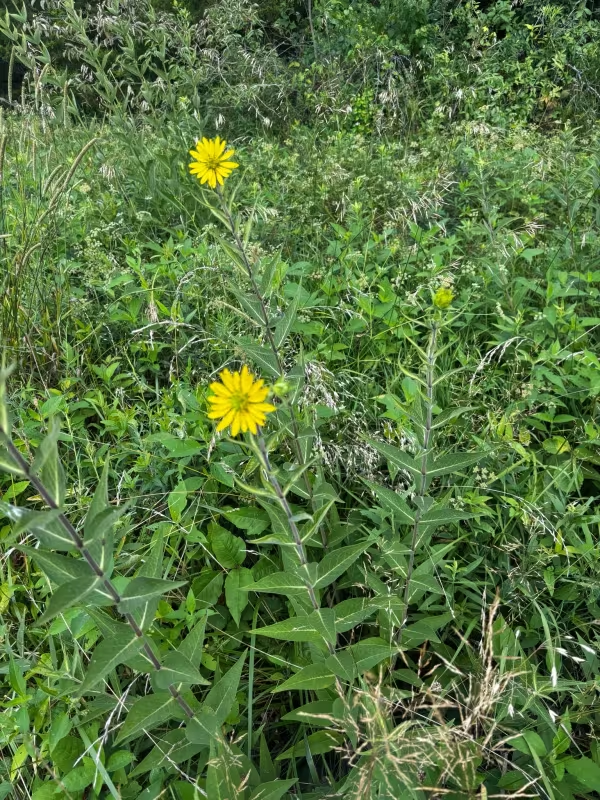
Description
Sowing dates
The Cup Plant (Silphium integrifolium) is best established by sowing in early spring or late autumn to allow for natural stratification of seeds. Proper seedbed preparation is essential, as the seedlings are slow-growing and require a weed-free start to thrive.
Seeds should be planted at a depth of 2–3 cm. Ensuring consistent soil moisture is crucial during the germination period to achieve a uniform stand across the field.
A row spacing of 45 to 70 cm is recommended to facilitate mechanical cultivation and weed control. Since it is a long-lived perennial, the initial spacing determines the long-term density of the crop stand.
As a member of the Asteraceae family, the Cup Plant develops a robust root system over its first year. This biological trait allows it to withstand environmental stress once established.
In terms of plant population, a target density that ensures full cover within two years is ideal. This minimizes the risk of weed encroachment and maximizes biomass production.
Growing requirements
This species performs best in deep, fertile silt loams or clay soils. While it has a high moisture requirement, it prefers well-drained sites where water does not stand for extended periods.
Full sun is an absolute requirement for the Cup Plant. Shade tolerance is low, and biomass yield drops significantly if the plants are situated in areas with limited light exposure.
The Cup Plant is highly winter-hardy and is native to regions with varying climatic extremes. It effectively utilizes its deep root system to access groundwater during brief periods of drought.
While the plant can thrive in various soils, adding phosphorus and nitrogen-based fertilizers during the active growth phase can significantly enhance leaf development and total yield.
Maintaining a neutral soil pH is beneficial for nutrient uptake. Given its longevity, soil testing every few years is recommended to monitor fertility levels.
Yield
The Cup Plant is highly valued for its massive biomass production, which is utilized for silage and biofuels. Yields are stable and can remain high for over a decade without replanting.
Nutritional analysis shows high levels of protein and soluble sugars during the pre-flowering and flowering stages. This composition makes it an excellent candidate for dairy cattle feed.
Biomass production typically peaks in the mid-to-late summer months. Farmers often report high dry matter content compared to traditional grass species when managed correctly.
The crop's ability to regrow after harvesting makes it sustainable for annual management. High yields are consistently achieved with proper irrigation and nitrogen management.
Beyond animal feed, the species is being researched for its potential in biogas production, as its chemical composition allows for efficient anaerobic digestion.
Main diseases and pests
Silphium integrifolium shows remarkable resistance to common pests and diseases. Its aromatic compounds act as natural repellents, reducing the need for chemical insecticides.
Powdery mildew can occasionally appear in overly dense or poorly ventilated stands during humid conditions. Proper row spacing is the most effective preventative measure.
Competition from perennial weeds is the primary threat during the establishment year. Once the Cup Plant forms a mature clump, it effectively outcompetes most invasive species.
While generally hardy, excessive soil compaction should be avoided, as it may limit root penetration and lead to premature stand decline in extreme cases.
No major viral or bacterial pathogens are known to cause economic losses in cultivated populations, making it an excellent crop for low-input agricultural systems.
Harvesting
Harvesting for silage should occur during the full bloom stage to ensure the optimal balance of nutrients. Cutting during this window provides the best quality fodder for livestock.
A cutting height of at least 10–15 cm is mandatory to protect the dormant buds located on the crown. This ensures that the plant has enough resources to regrow for the next season.
The cut material is chopped and compacted into silos. Its high sugar content aids in the fermentation process, resulting in highly palatable and preserved feed.
If seeds are the primary goal, harvest must be timed to minimize shattering. Since seed maturation is often uneven, multiple passes may be required in specialized fields.
Post-harvest, the residue decomposes well, adding organic matter back into the soil and supporting long-term soil health for the remaining perennial stand.