
Rhamnus yoshinoi
Rhamnus yoshinoi
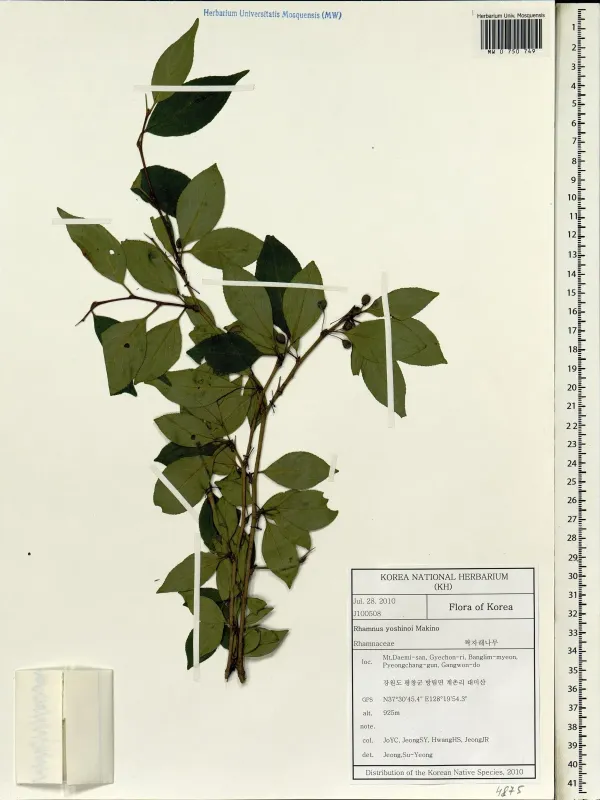
Description
Growing requirements
Rhamnus yoshinoi, commonly known as a type of buckthorn, belongs to the Rhamnaceae family. It is a deciduous shrub native to East Asia, particularly regions in Japan, where it thrives in temperate climates with well-defined seasonal changes.
The plant requires full sun to partial shade for optimal growth and development. It is adaptable to various soil types, provided that they are well-draining and moderately fertile, as the species does not tolerate waterlogged conditions that can cause root decay.
Botanically, it is characterized by its compact habit and distinct foliage. The leaves are typically ovate with prominent veins, providing a lush appearance throughout the growing season. The shrub maintains a dense structure that makes it an excellent candidate for formal landscaping.
Proper cultivation practices involve consistent watering during dry spells, especially for young specimens. Applying a balanced fertilizer in the early spring encourages vigorous shoot development and maintains the plant's health throughout the summer.
Its primary use is ornamental, frequently planted in hedges, privacy screens, or as a focal point in specialized gardens. Due to its hardiness, it is favored by landscape architects looking for reliable species that require minimal long-term maintenance.
Main diseases and pests
The main fungal threats include powdery mildew and leaf spot diseases, which typically develop under conditions of poor airflow and high humidity. Proper spacing between plants is essential to promote natural ventilation and minimize these risks.
Pests such as aphids and spider mites can colonize the foliage during the warmer months, causing leaf curling and chlorosis. Monitoring the underside of the leaves is a critical scouting task to prevent severe infestations that could stunt the plant.
Soil-borne insects, such as grubs, can damage the root system of newly planted specimens. Incorporating organic matter into the soil helps maintain a robust root environment and boosts the plant's natural defenses against localized soil threats.
Winter injury can occur in areas with extreme temperature fluctuations, leading to frost cracks in the bark. Applying mulch around the base of the shrub provides insulation for the roots and helps maintain consistent soil moisture levels throughout the winter.
Integrated pest management (IPM) strategies, including the use of horticultural oils and promoting beneficial insects, are recommended for long-term health. Avoid heavy chemical usage to preserve the ecological balance around the shrub's root zone.