
Reichardia intermedia
Reichardia intermedia
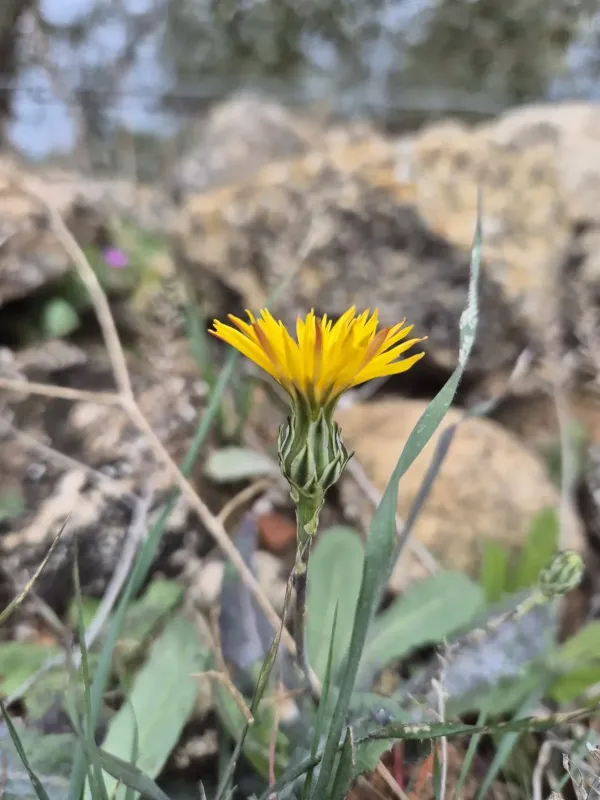
Description
Growing requirements
Reichardia intermedia belongs to the Asteraceae family and is recognized as a hardy herbaceous plant adapted to the distinct ecological conditions of Mediterranean environments.
The species primarily originates from arid and semi-arid regions. It is frequently found in rocky, well-drained soils, disturbed habitats, and along roadsides, showing significant resilience to heat.
For successful cultivation, the plant requires full sun exposure and soil with a neutral to alkaline pH. Good drainage is essential, as the root system is susceptible to decay in waterlogged conditions.
Botanically, it forms a basal rosette of leaves followed by branching stems during the flowering phase. The leaves are typically serrated or pinnatifid, often covered with a protective cuticle to minimize water loss.
Economically, Reichardia intermedia is valued as a wild edible vegetable and a source of forage for livestock in regions where other forage crops fail to thrive due to extreme temperatures.
Main diseases and pests
The plant can be susceptible to powdery mildew infections, which often occur when humidity levels rise unexpectedly or if there is insufficient air circulation around the plants.
Aphids represent the primary insect pest, frequently infesting the developing flower buds and soft stems, which can significantly reduce the overall biomass production.
Soil-borne pests such as wireworms and various larvae can damage the root system. Proper soil preparation and crop rotation help mitigate the risks associated with these threats.
Integrated pest management strategies involve monitoring plant populations early in the season to prevent localized outbreaks from spreading throughout the entire crop area.
Maintaining balanced soil nutrition and avoiding excessive nitrogen fertilization helps keep the plant tissues strong and more resistant to opportunistic pests and pathogens.