
Reaumuria negevensis
Reaumuria negevensis
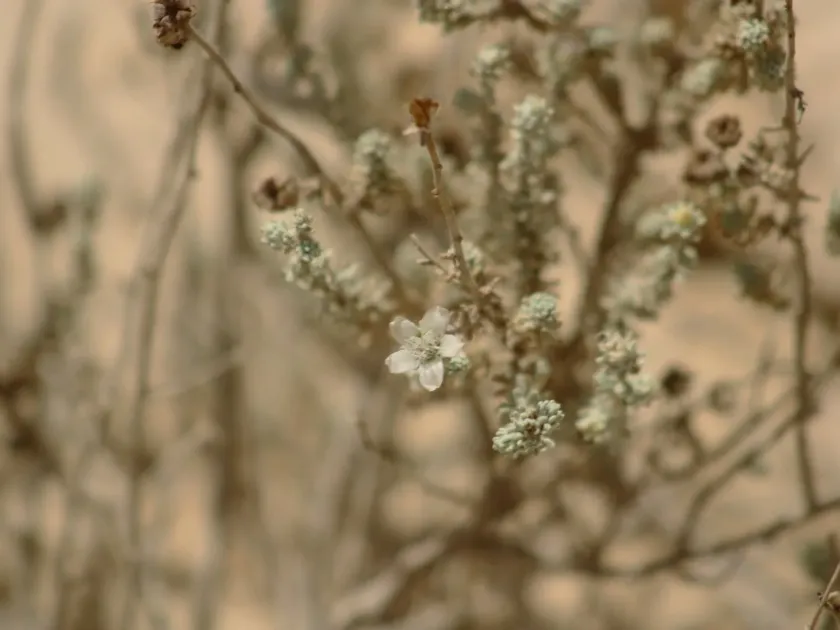
Description
Growing requirements
Reaumuria negevensis is a perennial subshrub belonging to the Tamaricaceae family. It is a highly specialized plant adapted to the hyper-arid conditions of desert environments, primarily endemic to the Negev Desert region.
This species demonstrates exceptional survival strategies against extreme heat and prolonged drought. Its physiological makeup allows it to maintain metabolic processes even when water availability is extremely limited, relying on its deep root system to access groundwater.
The plant is classified as a halophyte, possessing specialized glands on its leaves that excrete excess salts. This unique feature enables the plant to thrive in saline soils where osmotic stress would typically prevent the growth of most conventional crops.
Botanically, the plant features succulent foliage covered in a protective wax layer, which significantly reduces water loss through transpiration. Its structural resilience is an evolutionary response to the harsh, nutrient-poor, and often saline substrate of its native habitat.
In terms of agricultural potential, Reaumuria negevensis is studied for its ability to stabilize degraded soils in arid regions. Its role in ecological restoration and potential use as a forage source in challenging environments are key areas of contemporary research.