
Reaumuria hirtella
Reaumuria hirtella
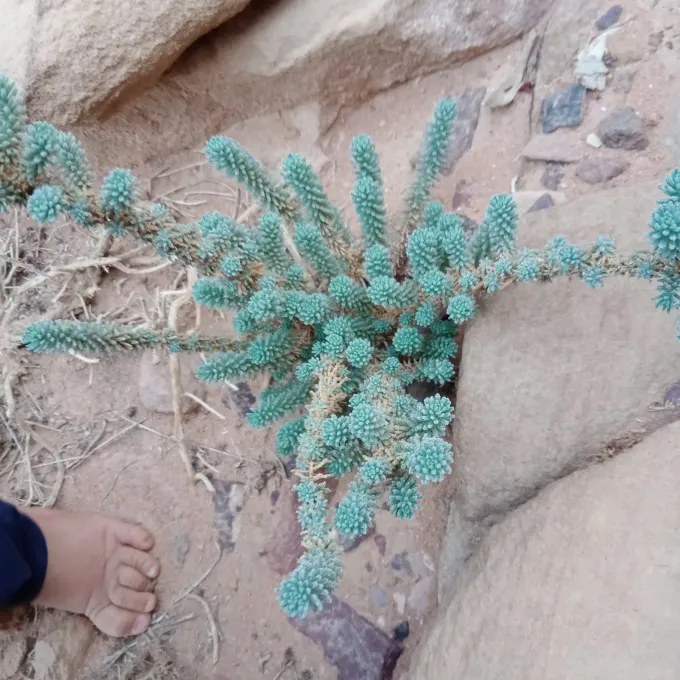
Description
Growing requirements
Reaumuria hirtella is a perennial subshrub belonging to the Tamaricaceae family. It is a highly specialized plant adapted to the harsh conditions of saline deserts and semi-arid environments, where survival requires unique physiological mechanisms.
The distribution range is primarily focused on the arid regions of Central Asia. The plant acts as a pioneer species in saline habitats, colonizing soils that are toxic or too dry for the majority of agricultural crops.
Its soil requirements are distinct, as it is a dedicated halophyte. It thrives in high-salinity soils, including salt flats and gypsiferous substrates, maintaining high productivity where other vegetation is completely absent.
The climate requirements include high tolerance to intense solar radiation and extreme thermal fluctuations. Its leaves are covered in fine hairs (hirtella), which significantly reduce water loss through transpiration and protect the plant from high desert temperatures.
The root system is extensive and deep, allowing the plant to reach deep aquifers. This biological structure is essential for its survival during prolonged droughts and contributes to soil stabilization against erosion.
Yield
The agricultural value of Reaumuria hirtella is mainly centered on its role as forage for camels, sheep, and goats. It provides essential nutrition, particularly in autumn and winter when seasonal grasses are scarce or have lost their nutritional content.
While the biomass yield per hectare is not massive by intensive farming standards, it is remarkably consistent in unfavorable climatic zones. It serves as a vital survival food source for livestock in desert range management systems.
The shoots contain a variety of minerals and essential salts that help regulate the metabolism of grazing animals. This nutritional profile makes it an important supplement for livestock foraging on sparse, low-quality desert vegetation.
Beyond its value as forage, the plant contributes to ecosystem health by preventing desertification. Its presence helps bind sandy soils and promotes the gradual accumulation of organic matter in extremely poor soil conditions.
Management of Reaumuria stands requires a sustainable grazing approach to prevent overgrazing. By limiting the livestock pressure, producers can maintain the density of the plant cover, ensuring long-term grazing productivity in arid lands.