
Reaumuria alternifolia
Reaumuria alternifolia
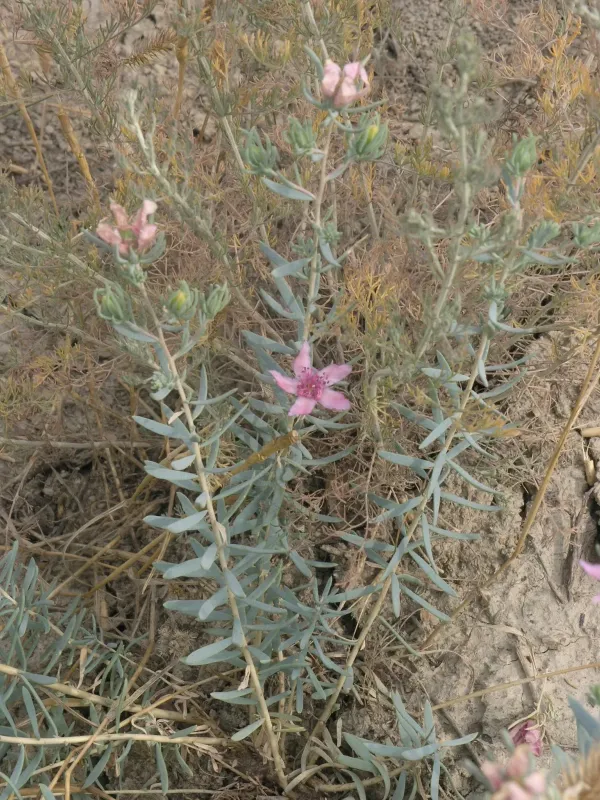
Description
Growing requirements
Reaumuria alternifolia is a halophytic subshrub belonging to the Tamaricaceae family. It is highly specialized for growth in extreme arid conditions and is notable for its ability to thrive on highly saline soils where other vegetation cannot persist.
The plant is native to the desert regions of Central Asia, specifically found in Kazakhstan and surrounding areas. It is widely distributed across rocky and salt-encrusted plains, playing a vital role in the stability of these fragile ecosystems.
Botanically, it features a complex network of branches and specialized leaves equipped with salt glands. These glands actively excrete excess salts absorbed from the soil, a unique physiological adaptation to high salinity environments.
Climatic requirements are strict: the plant thrives under intense solar radiation and minimal precipitation. Its deep root system allows it to exploit moisture from deep soil layers, making it a pioneer species for desert reclamation and sandy soil stabilization.
The main agricultural use of this plant is as forage for livestock, particularly camels and sheep during winter months. It contributes to sustainable rangeland management in areas where conventional forage production is impossible.
Main diseases and pests
Reaumuria alternifolia is generally resistant to standard agricultural pests and diseases. Its survival in harsh desert conditions is facilitated by its high salt content, which serves as a natural deterrent against most insects and microbial pathogens.
The primary threat to the species is overgrazing and trampling by livestock, which degrades soil structure and prevents seed germination. Large-scale desertification and industrial activity also pose significant risks to its natural habitat.
Root rot is rarely observed but may occur if the soil becomes waterlogged for extended periods. However, in its typical dry and saline environment, such issues are essentially non-existent compared to other crop varieties.
Protection strategies focus on regulating grazing intensity and protecting existing stands from mechanical damage. Sustainable management involves creating protected zones to ensure the plant continues to act as a buffer against soil erosion.
The conservation of this species is essential for maintaining the biodiversity of arid lands. By preserving healthy populations, land managers can ensure the long-term viability of grazing resources in otherwise unproductive regions.