
Rauhia multiflora
Rauhia multiflora
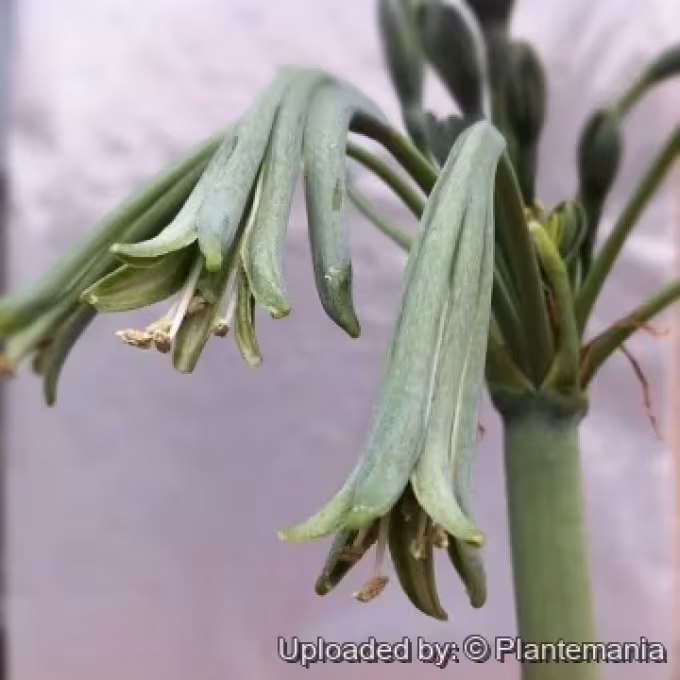
Description
Growing requirements
Rauhia multiflora is a distinctive succulent species belonging to the Amaryllidaceae family. Native to the arid desert regions of Peru, this plant has evolved unique physiological mechanisms to survive in harsh, low-rainfall environments.
The plant is characterized by a large, exposed bulb that serves as a storage organ for water and essential nutrients. It produces broad, fleshy leaves with a glaucous texture, allowing the plant to minimize water loss under intense sunlight.
To cultivate this species successfully, growers must provide a highly porous and well-draining mineral substrate. A mixture of gravel, pumice, and minimal organic matter is ideal to prevent moisture accumulation around the basal plate of the bulb.
Environmental requirements include bright, indirect light or full sun exposure in temperate climates. It is crucial to maintain a consistent rhythm of growth followed by a pronounced dormant period, during which water application must be almost zero.
In terms of хозяйственное использование (economic use), the plant is primarily a botanical curiosity for collectors and rare plant enthusiasts. It is not considered an agricultural commodity but is highly valued in specialty horticulture.
Main diseases and pests
The primary threat to Rauhia multiflora is root and bulb rot caused by waterlogged soil. Excess moisture, especially when the plant is not in its active growth phase, quickly leads to irreversible decay of the tissues.
Common pests include mealybugs and spider mites, which thrive in indoor environments with limited airflow. These insects can cause significant damage to the fleshy leaf surface if left untreated for an extended period.
Prevention of these threats focuses on rigorous irrigation management. The substrate must be completely dry before the next watering session begins, and the plant should be placed in an area with excellent ventilation.
For pest management, chemical systemic insecticides are effective, but they should be applied with caution to avoid chemical burns on the plant’s sensitive epidermis. Manual removal of pests is also a viable option for small collections.
Regular visual inspections of the bulb's surface are recommended to ensure there are no soft, mushy spots, which are indicative of early-stage fungal infection requiring immediate repotting into dry substrate.