
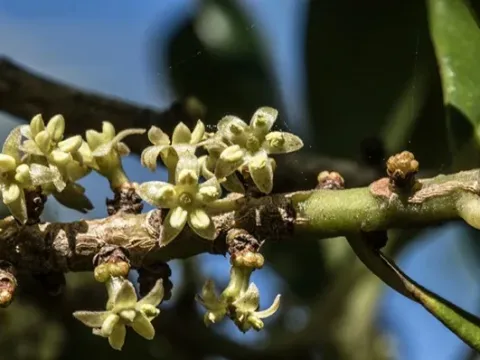
Rapanea
Rapanea
Rapanea is a genus of evergreen shrubs and small trees belonging to the Myrsinaceae family. In recent botanical revisions, many species have been reclassified into the genus Myrsine, though the term Rapanea is still widely used in horticultural trade.
What the section contains

Rapanea
The plant originates from tropical and subtropical areas, including parts of Africa and Asia. Due to its specific environmental needs, it is primarily cultivated as an ornamental indoor or greenhouse plant in temperate regions.
Rapanea thrives in bright, indirect light. Direct exposure to intense sunlight should be avoided as it causes leaf scorch, damaging the characteristic glossy texture of the foliage. The plant prefers temperatures between 18°C and 24°C.
The soil must be well-draining, nutrient-rich, and slightly acidic. A common issue in cultivation is waterlogging, which the plant cannot tolerate, so adequate drainage layers in the container are essential for healthy root development.
In terms of usage, Rapanea is valued for its dense evergreen canopy, which makes it an excellent choice for interior landscaping. It responds well to pruning, allowing for controlled growth in container gardening environments.
The most common pests affecting Rapanea are spider mites and scale insects. These pests often thrive in low-humidity indoor environments, targeting the undersides of leaves and stems, which can weaken the plant over time.
Fungal diseases related to poor root aeration and overwatering pose a significant risk. Preventive measures include regular monitoring for pest activity, ensuring sufficient air circulation, and maintaining a balanced irrigation schedule to avoid saturated soil.