
Rapanea rhododendroides
Rapanea rhododendroides
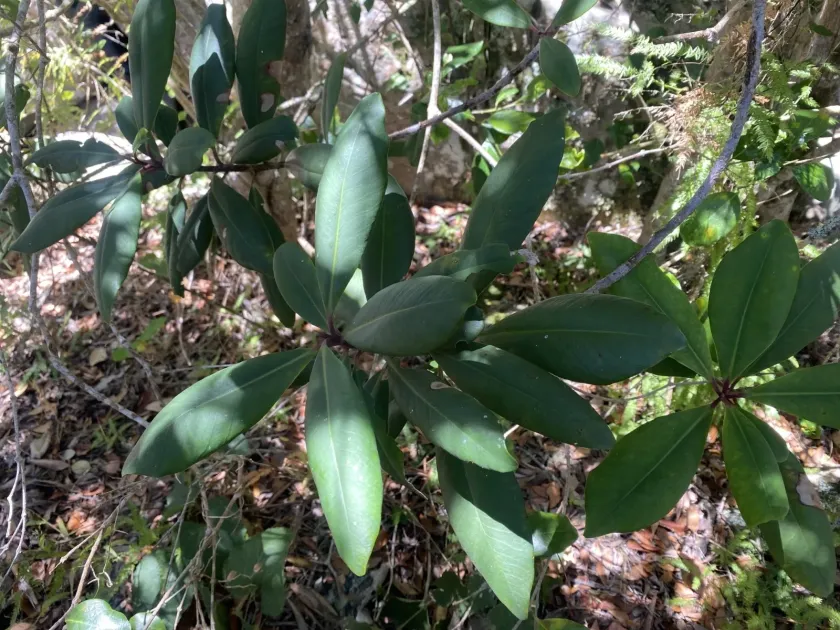
Description
Growing requirements
Rapanea rhododendroides is an evergreen tree or large shrub classified within the Primulaceae family. It is distinct for its robust, rhododendron-like foliage and plays a key ecological role as a component of the canopy in the montane forests of East and Central Africa.
Originating from the high-altitude regions, this species is well-adapted to the cool, misty environment of tropical mountains. It thrives in locations where annual rainfall is consistent, making it an essential species for maintaining forest integrity in its native habitats.
Botanically, the species is characterized by leathery leaves and small, aggregate flowers that develop into dark, fleshy fruits. These fruits are highly attractive to various bird species, which facilitates the natural seed dispersal and regeneration of the forest stands.
In terms of cultivation, it requires deep, humus-rich soil with excellent drainage. While it thrives in shaded forest environments, it can tolerate more exposure as it matures, provided the root zone remains consistently cool and protected from excessive evaporation.
The wood of Rapanea rhododendroides is highly valued for its fine grain and durability. It is traditionally used in local construction, high-quality charcoal production, and woodcraft. Its slow growth rate makes it a species that requires careful management in sustainable forestry programs.