
Desert Chicory
Rafinesquia neomexicana
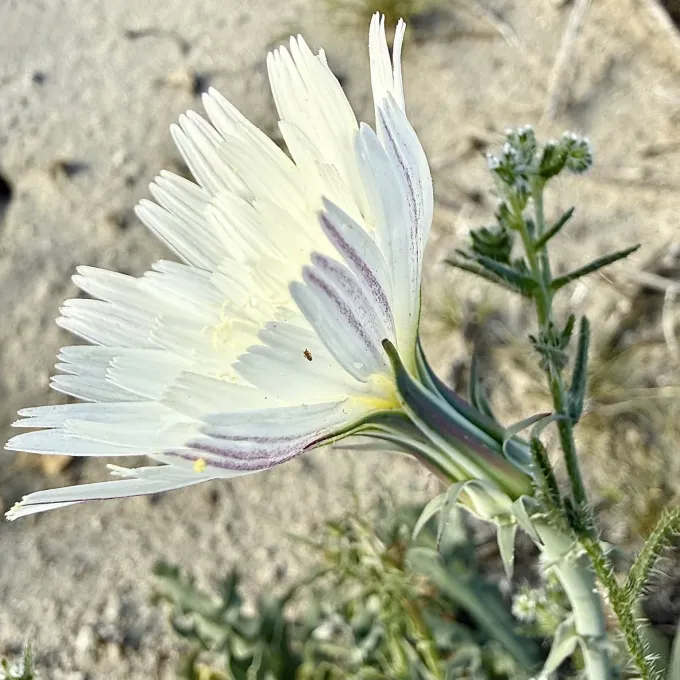
Description
Sowing dates
Rafinesquia neomexicana, commonly known as Desert Chicory, is an annual herb that thrives in the arid environments of the Southwestern United States and Mexico.
In cultivation, seeds should be sown in late autumn or early spring to mimic the natural germination cycle triggered by cool-season rains.
The planting substrate must provide excellent drainage, as the seeds are sensitive to prolonged moisture, which can cause premature decay before germination.
Surface sowing or very light covering with sand is recommended, as the seeds require ambient light to successfully initiate their development process.
Maintaining a consistent, light moisture regime during the first few weeks is crucial for establishing a robust root system before the onset of the desert heat.
Growing requirements
This member of the Asteraceae family requires full sun exposure and performs best in open, unshaded areas where light intensity is at its peak.
The species is highly adapted to nutrient-poor soils, particularly those with a sandy or rocky composition that allows for rapid water percolation.
Temperature requirements are specific, as the plant prefers cool to moderate temperatures for its primary vegetative growth and requires heat to induce flowering.
It demonstrates remarkable drought tolerance once established, making it an excellent candidate for low-maintenance agricultural systems in arid climates.
The plant does not require high levels of fertilization; in fact, excess nutrients can lead to weakened stems and increased susceptibility to pests.
Main diseases and pests
The primary threats to this crop include fungal pathogens that develop under conditions of poor soil aeration and excessive humidity during the cooler months.
Aphid infestations are the most common pest problem, frequently targeting the tender floral buds and limiting the overall seed production capacity.
Root rot caused by stagnant water is the most frequent cause of crop failure, necessitating strict adherence to irrigation schedules that ensure the soil dries out between watering.
Environmental stressors, such as unseasonable frosts during the seedling stage, can also significantly impact the vigor and eventual harvest quality of the stand.
Integrated pest management strategies focusing on beneficial insect populations are recommended to keep aphid counts below the threshold of economic damage.
Harvesting
Harvesting for seed production should occur once the pappus-bearing fruits are fully mature and begin to naturally detach from the receptacle.
Manual collection of the seed heads is necessary, as the seeds are dispersed rapidly by wind once they reach the stage of full senescence.
The timing of the harvest is critical; gathering should be performed during dry, calm weather to prevent losses to wind dispersal and preserve seed viability.
After collection, the plant material should be dried in a ventilated area before processing to remove debris and ensure long-term storage potential.
The harvested seeds should be stored in cool, dry conditions to maintain high germination rates for the following season's planting requirements.