
Rangoon creeper
Quisqualis indica
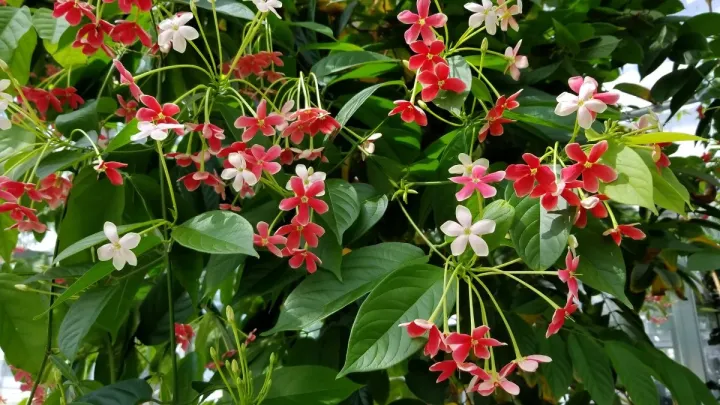
Description
Growing requirements
The Rangoon creeper (Quisqualis indica) is a vigorous, woody climbing vine belonging to the Combretaceae family. It is native to tropical Asia and Africa, where it thrives as an aggressive climber that can reach lengths of several meters in favorable conditions.
This species is strictly tropical and requires warm, humid environmental conditions. It does not tolerate frost and prefers stable temperatures ranging from 20°C to 30°C. Outside of tropical climates, it is typically cultivated in greenhouses or as a seasonal container plant.
Successful cultivation requires a well-draining, nutrient-rich soil mix with a slightly acidic to neutral pH level. Proper drainage is critical, as the roots are prone to rot if kept in saturated or stagnant water conditions for extended periods.
The plant is highly photophilous and requires significant sunlight to produce its signature fragrant, color-changing flowers. In indoor environments, it should be provided with as much bright, indirect light as possible to ensure healthy vegetative growth and profuse flowering.
Commercially and ornamentally, Quisqualis indica is prized for its aesthetic value in landscape design, covering trellises and pergolas. It is also historically recognized for traditional medicinal applications, particularly as a remedy for intestinal parasites.
Main diseases and pests
The primary pests affecting this plant include spider mites, aphids, and scale insects. Regular monitoring of the foliage and stems is recommended, especially in indoor settings where humidity levels may fluctuate significantly.
Pathological issues often arise from poor horticultural practices, such as overwatering or insufficient soil aeration, which lead to root rot and fungal infections like powdery mildew. Maintaining adequate airflow is the best preventative measure against these threats.