
Common oak
Quercus robusta
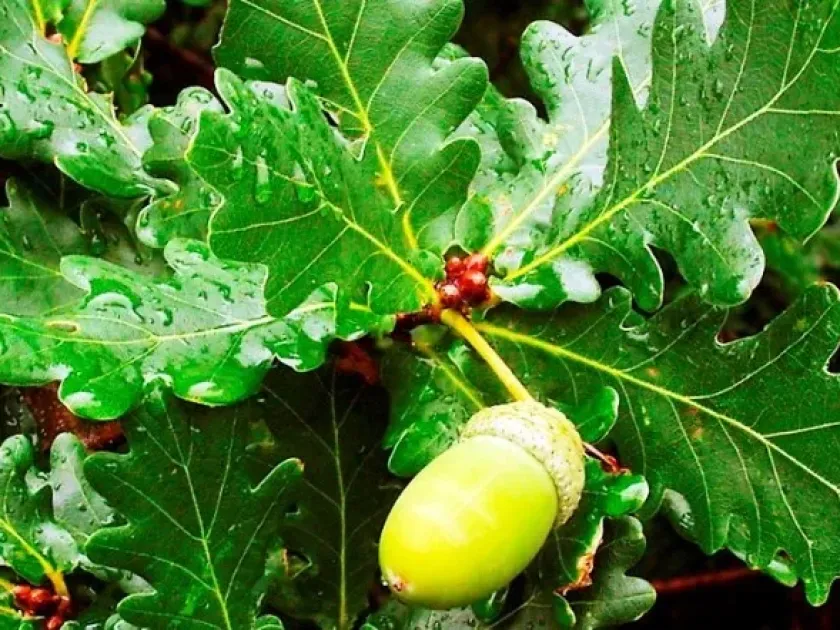
Description
Sowing dates
The sowing of Common oak (Quercus robur) acorns is most effective when conducted in the autumn immediately following collection to ensure natural stratification.
Spring sowing is an alternative, provided the acorns have been stored in moisture-controlled environments to maintain viability and prevent desiccation.
The sowing depth is generally maintained at 5–10 cm, depending on the soil structure, to prevent seed damage while ensuring optimal germination.
For reforestation projects, selecting high-quality, dense, and pest-free acorns is the primary factor for achieving high seedling survival rates.
Standard row planting or cluster sowing are commonly employed to establish uniform forest stands that promote straight tree trunk development.
Growing requirements
Common oak is a member of the Fagaceae family, widely recognized for its robust growth habits and significant ecological and economic value.
The tree thrives in deep, fertile, loamy soils that possess good moisture retention but are free from stagnant water and chronic waterlogging.
It is classified as a light-demanding species, requiring adequate spacing and regular thinning interventions to ensure healthy crown development.
Common oak exhibits strong climate adaptability and is well-suited to temperate zones, though young saplings require protection from harsh frost.
The extensive taproot system allows the tree to stabilize itself effectively and access deep nutrient reservoirs during dry seasons.
Main diseases and pests
Powdery mildew represents a significant fungal threat, especially to young seedlings residing in humid or poorly ventilated nurseries.
Root pathogens and various wood-decaying fungi can compromise the structural integrity of the tree, leading to long-term decline.
Defoliating insects, such as gypsy moths and various oak leaf rollers, can significantly reduce the tree's photosynthetic capacity if outbreaks occur.
Boring insects represent a critical risk to timber quality, as their galleries penetrate deep into the sapwood and heartwood.
Integrated pest management, including monitoring and maintaining forest hygiene, is essential to mitigate the impact of these various threats.
Harvesting
The primary economic use of Common oak is the production of high-grade timber, which is valued for its durability and aesthetic beauty.
Timber harvest usually occurs after a rotation period of 80 to 120 years, depending on the management objectives and site growth conditions.
Beyond timber production, these trees serve as essential components in shelterbelts, helping to mitigate wind erosion on agricultural land.
Acorns are periodically harvested or collected for livestock feed and industrial applications, including the extraction of tannins.
Sustainable harvesting practices ensure that forest regeneration is maintained, balancing the immediate economic gain with long-term ecological stability.