
Pyxidanthera barbulata
Pyxidanthera barbulata
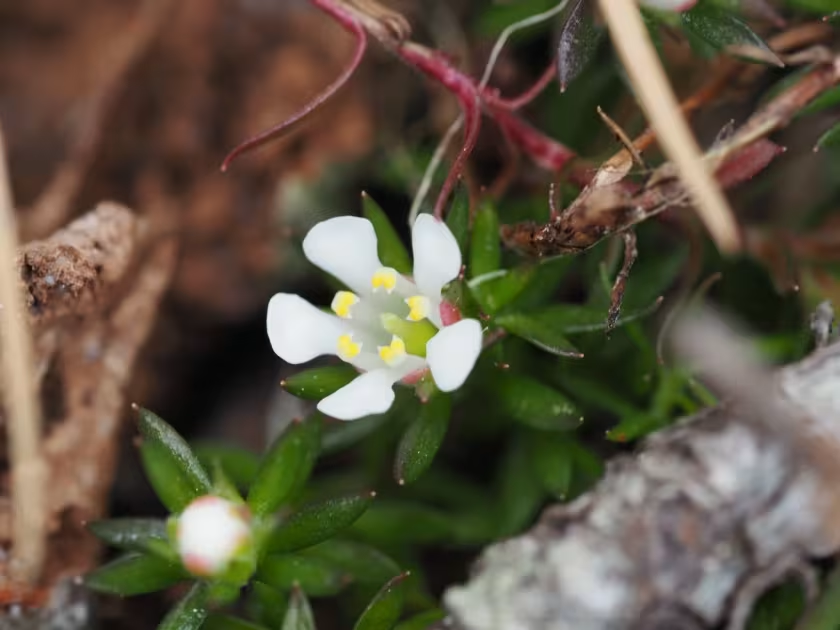
Description
Growing requirements
Pyxidanthera barbulata, commonly known as flowering pyxie, is a perennial, prostrate shrub belonging to the Diapensiaceae family. This rare plant is native to the sandy pine barrens of the Atlantic coastal states in the United States, particularly New Jersey and the Carolinas.
The plant has strict edaphic requirements, thriving exclusively in highly acidic, sandy, or peaty soils. It is considered an indicator species for specific soil conditions and is extremely sensitive to any deviation in pH levels toward alkalinity.
Regarding climate, it prefers regions with moderate temperatures and high humidity, avoiding arid or excessively hot environments. In cultivation, it requires a well-drained site that mimics the well-aerated sandy soil of its native habitat.
Agronomic management is minimal but critical, focusing on maintaining a low pH (typically between 4.0 and 5.5). Fertilization is usually discouraged, as the plant is highly adapted to nutrient-poor, oligotrophic environments common in pine barrens.
Botany-wise, the species forms dense, moss-like mats of evergreen foliage, which become covered in small, star-shaped white or pale pink flowers during the early spring. It is primarily managed as a botanical specimen rather than a broad-acre crop.
Main diseases and pests
Pathogen risks are primarily limited to root rot and fungal wilt, which are triggered by waterlogging and poor soil aeration. To prevent these, ensuring sharp drainage and avoiding over-irrigation is essential for long-term plant health.
Pest threats are minimal in the wild; however, in artificial environments such as nurseries, spider mites can cause damage by colonizing the dense leaf mats. Maintaining appropriate air circulation is the most effective preventative measure against such infestations.