
Puschkinia kurdistanica
Puschkinia kurdistanica
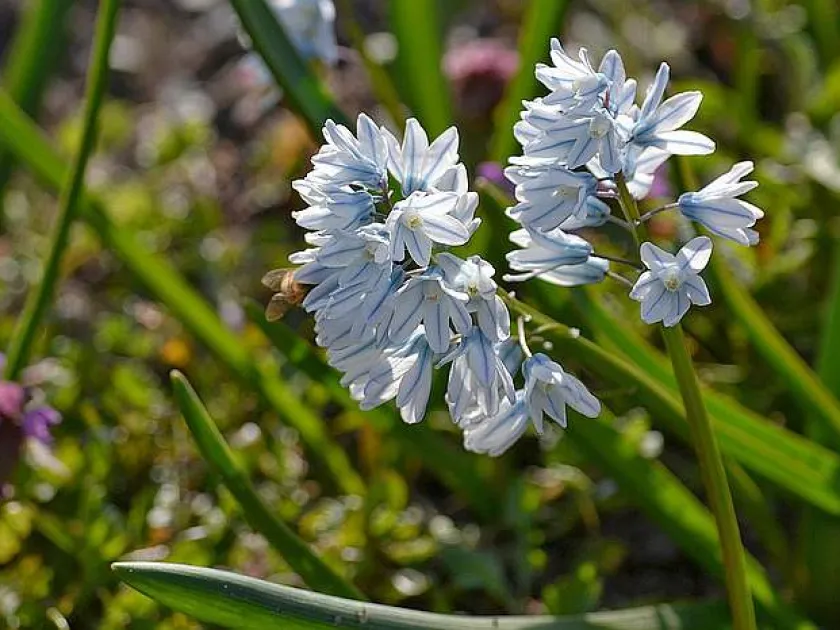
Description
Sowing dates
Planting of Puschkinia kurdistanica bulbs is ideally carried out during the autumn season. It is crucial to ensure that the soil temperature has cooled down, which promotes healthy root development before the onset of deep winter frost.
The bulbs should be planted at a depth of approximately 8 to 10 centimeters. Proper spacing of about 10 to 15 centimeters between individual bulbs is necessary to prevent overcrowding and allow the plants to form robust clumps over several years.
Adding a base layer of coarse sand at the bottom of the planting hole is a recommended agricultural practice. This simple step significantly enhances drainage and protects the bulb's basal plate from rotting due to stagnant moisture.
Once planted, it is advisable to mulch the surface with organic matter such as peat or well-rotted compost. This layer provides a thermal buffer, shielding the newly planted bulbs from temperature fluctuations during the transition to winter.
Propagation is most effective through the division of bulb offsets. This process is best done after the foliage has fully withered and the plant has entered its dormant phase, ensuring minimal stress to the root system.
Growing requirements
Puschkinia kurdistanica, a member of the Asparagaceae family, is a spring-flowering bulb native to the mountainous regions of Kurdistan. Its biological adaptation makes it well-suited for temperate climates with distinct seasons.
The plant thrives in locations that offer plenty of sunlight in early spring but may tolerate light shade provided by deciduous trees. This makes it an excellent candidate for naturalizing under tree canopies or in rock garden settings.
Regarding soil preferences, the plant requires well-drained, fertile soil with a neutral pH. Heavy or waterlogged clay soils should be amended with organic material or grit to ensure that the bulbs do not remain wet for extended periods.
Moisture requirements are highest during the active growth and flowering phase. Once the flowering period concludes and the leaves begin to yellow, the soil should ideally be kept drier to facilitate the plant's natural dormancy period.
Fertilization should be handled with care, focusing on providing essential nutrients just as the snow melts in early spring. Balanced mineral fertilizers help stimulate strong flower stems and support the accumulation of energy reserves in the bulb.
Main diseases and pests
The most significant threat to Puschkinia kurdistanica is fungal infection, particularly base rot triggered by poor drainage. These pathogens can rapidly spread through a planting bed if the soil remains constantly saturated with water.
Pests such as bulb mites and various rodents pose a risk to the health of the bulb population. Mites damage the tissue, leading to stunted growth, while rodents can physically consume the bulbs during the winter dormancy period.
Preventative measures include thorough inspection of all bulbs before planting to ensure only disease-free specimens are introduced to the soil. Using chemical dips or fungicides can also offer an extra layer of protection against soil-borne issues.
Sanitation in the garden is essential to control pest populations. Removing decaying organic matter and maintaining good soil aeration helps create an environment where the plants can resist common diseases more effectively.
If viral symptoms like leaf streaking appear, infected plants must be promptly rogued from the area to prevent the spread of the virus. Maintaining a balanced nutritional program helps keep the plants vigorous and less susceptible to environmental stress.