
Puschkinia bilgineri
Puschkinia bilgineri
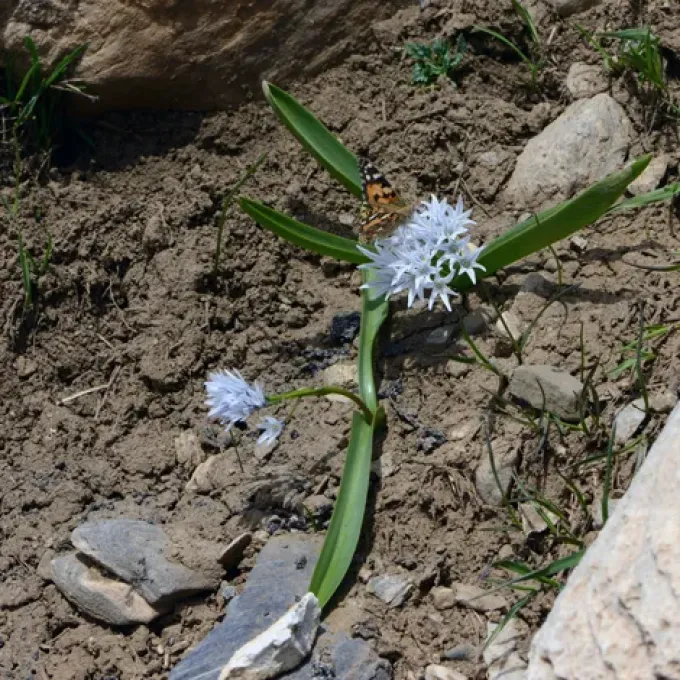
Description
Growing requirements
Puschkinia bilgineri is a rare bulbous perennial species from the Asparagaceae family, which is found in the wild primarily in specific mountainous regions of Turkey.
This crop prefers well-drained, rocky, or sandy loam soils with a neutral to slightly alkaline reaction, typical of its natural high-altitude environment.
The plant requires high light levels, although it tolerates light shading during the spring until active leaf growth, as it follows an ephemeral life cycle.
Regarding climate conditions, the species requires moderate moisture during the growing season and a distinct dry period during the summer dormancy to ensure bulb survival.
In ornamental horticulture, this crop is valued for its early blooming period and compact inflorescence shape, making it ideal for rock gardens and alpine installations.
Main diseases and pests
The primary threats to Puschkinia arise from waterlogging in the soil, which inevitably leads to the rotting of the bulb's basal plate and the development of fungal infections, such as gray mold.
Under conditions of high humidity, the root system is prone to Fusarium wilt, which necessitates strict adherence to irrigation regimes and the provision of adequate drainage at planting.
Among pests, bulb mites and root-knot nematodes represent the greatest danger, as they damage bulb tissues and facilitate the spread of secondary pathogens.
If the planting site lacks sufficient air circulation, the plants may suffer from powdery mildew, especially during spring seasons marked by sharp diurnal temperature fluctuations.
Disease prevention involves treating the planting material prior to placement in the soil and carefully culling any bulbs with physical damage, which serve as entry points for pathogens.