
Solitaire palm
Ptychosperma elegans
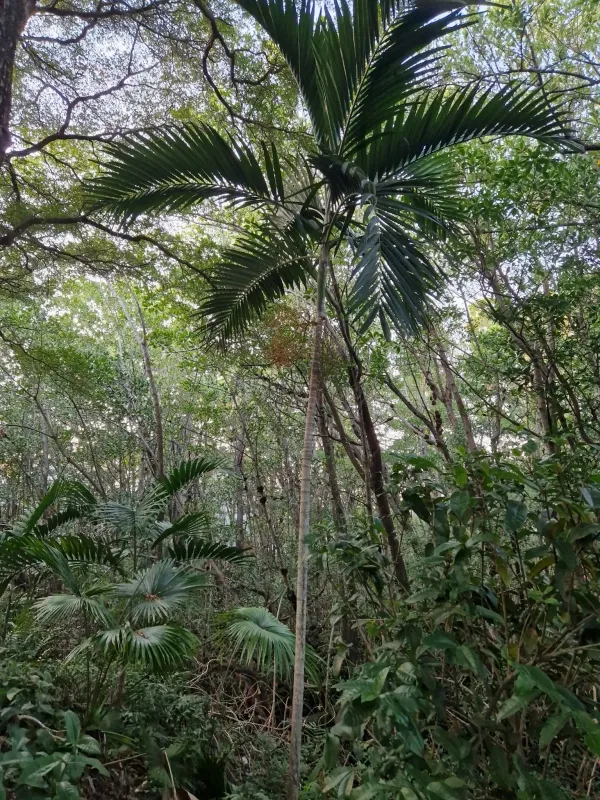
Description
Sowing dates
Propagation of the Solitaire palm is primarily achieved through seeds. To ensure high germination rates, fresh seeds should be planted immediately after they have been harvested from the fruit.
Seeds are placed in a porous, well-draining potting medium consisting of peat moss and perlite. A temperature range between +25°C and +30°C is essential to stimulate the germination process.
The germination period can be extended, often requiring several months of consistent moisture and heat. Providing bottom heat is a recommended technique for commercial growers.
Once seedlings have developed two to three true leaves, they should be transplanted into individual containers to prevent root competition and encourage healthy shoot development.
Young palms are sensitive to transplant shock, so it is vital to handle the root ball with extreme care during the transfer process to maintain soil integrity.
Growing requirements
Ptychosperma elegans belongs to the Arecaceae family and is native to the rainforests of Queensland, Australia. It is a highly popular ornamental choice for tropical landscaping.
The plant thrives in bright, indirect light conditions. While it can tolerate some morning sun, exposure to intense midday heat often causes leaf scorching and yellowing.
Soil requirements involve a rich, slightly acidic to neutral substrate with exceptional drainage characteristics. Waterlogging must be strictly avoided to prevent root damage.
Humidity levels should be maintained high, ideally above 60%. If the air is too dry, especially in greenhouse environments, leaf tips may begin to desiccate and turn brown.
Consistent temperatures are crucial for this species. It is highly intolerant of frost, and any exposure to temperatures below +10°C can result in significant tissue damage or death.
Main diseases and pests
Common pests affecting the Solitaire palm include spider mites, mealybugs, and scale insects, which frequently thrive in environments with low air circulation and warm temperatures.
Root rot, primarily caused by Phytophthora or Pythium species, is a major concern occurring when soil moisture remains excessive for extended periods without aeration.
Effective management includes maintaining optimal plant spacing for air circulation and avoiding overhead watering, which can encourage fungal growth on foliage.
In case of infestation, targeted applications of horticultural oils or systemic insecticides should be utilized, adhering strictly to the recommended application rates.
Regular inspection of the underside of leaves and the crown area allows for the early detection and control of pests before they reach damaging population levels.