
Pale Pteronia
Pteronia pallens
Description
Growing requirements
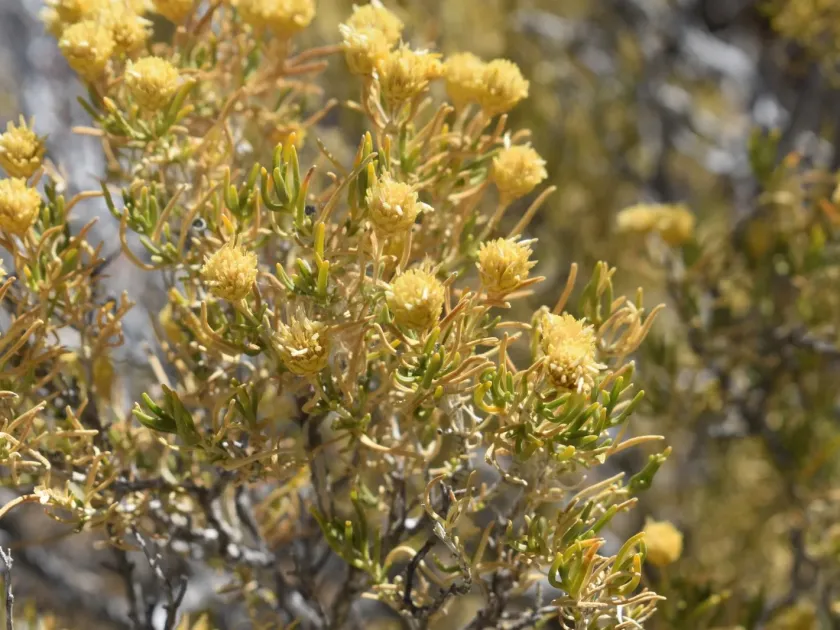
Pale Pteronia (Pteronia pallens) is a perennial shrub belonging to the Asteraceae family. It is a native species primarily found in the semi-arid regions of Southern Africa, particularly within the Karoo biome.
The species is highly specialized for life in harsh, dry environments. It thrives in well-drained, nutrient-poor, and often rocky soils, demonstrating remarkable resilience to extreme thermal fluctuations.
Botanical features include small, linear, pale-colored leaves that help the plant minimize water loss through transpiration. This xerophytic adaptation is critical for surviving the long dry seasons typical of its habitat.
Optimal growth conditions require full sun exposure and very low atmospheric humidity. The plant is drought-deciduous or semi-deciduous depending on the severity of the water stress encountered during the season.
In terms of land management, Pteronia pallens is viewed as a natural component of rangelands. It is not typically sown as a commercial crop but is managed as a wild forage resource for livestock.
Yield
The yield of Pale Pteronia is inherently low due to the slow growth rate necessitated by its arid environment. It is not an intensive forage crop but serves as a crucial dry-season buffer.
Nutritional value fluctuates significantly throughout the year, with peak quality occurring during the vegetative growth phase. Herbivores consume both leaves and tender shoots when alternative feed is scarce.
Sustainable yield management requires rotational grazing systems. Overgrazing can deplete the root reserves of the shrub, leading to a long-term decline in population density and overall biomass.
Assessment of yield should focus on the shrub's availability during the most stressful months for livestock. It provides a reliable, if not abundant, source of roughage in arid range ecosystems.
Productivity improvements are usually not feasible through intensive cultivation. Instead, land managers focus on maintaining soil health and preventing competition from non-native invasive woody species.
Main diseases and pests
The most significant threat to Pteronia pallens is unsustainable grazing pressure. Persistent over-utilization prevents the shrub from regenerating, leading to mortality of mature plants.
Root rot, induced by uncharacteristic periods of high rainfall or waterlogged soil conditions, represents a biological threat to the health of the plant population.
Various insects and grasshoppers can cause defoliation during peak growth stages. While the plant can usually recover, significant insect pressure in conjunction with drought can lead to plant death.
Soil erosion is a constant environmental threat. When the protective ground cover is removed, the root systems become vulnerable to desiccation, limiting the shrub's ability to extract deep moisture.
Invasive weed encroachment presents a serious risk in many parts of the Karoo. Competitive species can displace Pale Pteronia, reducing the biodiversity and overall resilience of the rangeland.