
Sargent's Cherry Palm
Pseudophoenix sargentii
Description
Growing requirements
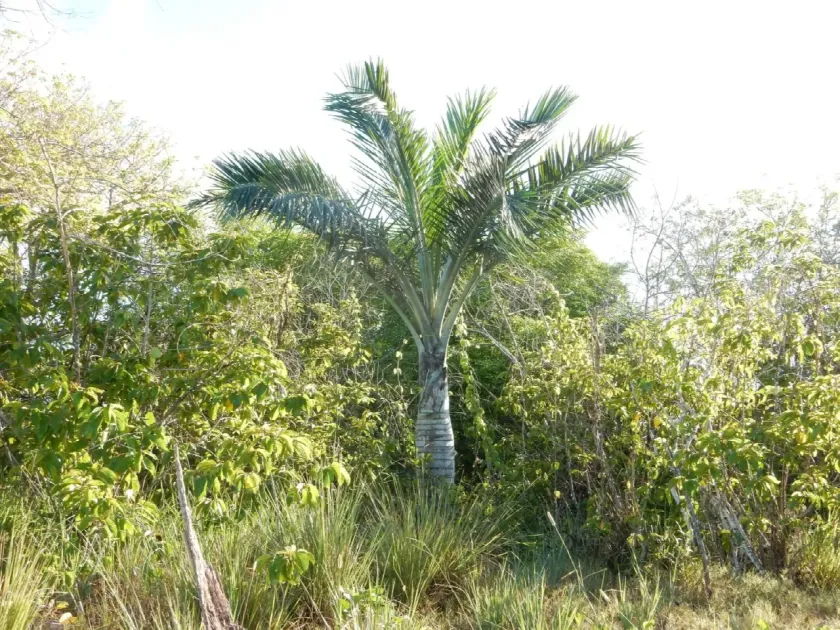
Sargent's Cherry Palm, scientifically known as Pseudophoenix sargentii, is a slow-growing palm belonging to the Arecaceae family. Native to the Caribbean, Florida, and Mexico, it is highly valued for its elegant, ringed trunk and ornamental qualities.
The plant thrives in full sun exposure. While young specimens may tolerate partial shade, mature palms require direct sunlight to maintain a compact shape and vibrant foliage color, which is essential for optimal development.
Soil requirements are quite specific: the palm demands excellent drainage. In its natural habitat, it grows in rocky or sandy substrates, so it is crucial to avoid heavy soils that retain water, as this leads to root suffocation.
Climatic needs are strictly tropical or subtropical. It has a high tolerance for salt spray, making it suitable for coastal landscaping, but it is not frost-tolerant and must be protected from temperatures below freezing.
Regarding irrigation, it is a drought-tolerant species once established, but it benefits from regular watering during the peak growing season to ensure healthy frond production and structural integrity of the stem.
Main diseases and pests
The primary agronomic threat to Pseudophoenix sargentii is fungal root rot. This typically occurs in containers or poorly drained landscapes where soil moisture remains consistently high for extended periods.
Pests such as the palm weevil pose a severe risk. These insects bore into the trunk or apical meristem, causing rapid decline and death of the plant; early detection and systemic pesticide application are mandatory.
Mealybugs and scale insects are common in nursery settings. They congregate on the undersides of leaves and in the leaf bases, hindering photosynthesis and weakening the palm's overall vigor.
Leaf spot diseases, often caused by stagnant humidity, can damage the foliage. Proper spacing and airflow are critical strategies to mitigate these issues in intensive cultivation environments.
Nutrient deficiencies, particularly of magnesium or potassium, can manifest as yellowing of the fronds. A balanced, micronutrient-rich fertilizer program is essential for maintaining the visual health of the palm.