
Pseudarthria hookeri
Pseudarthria hookeri
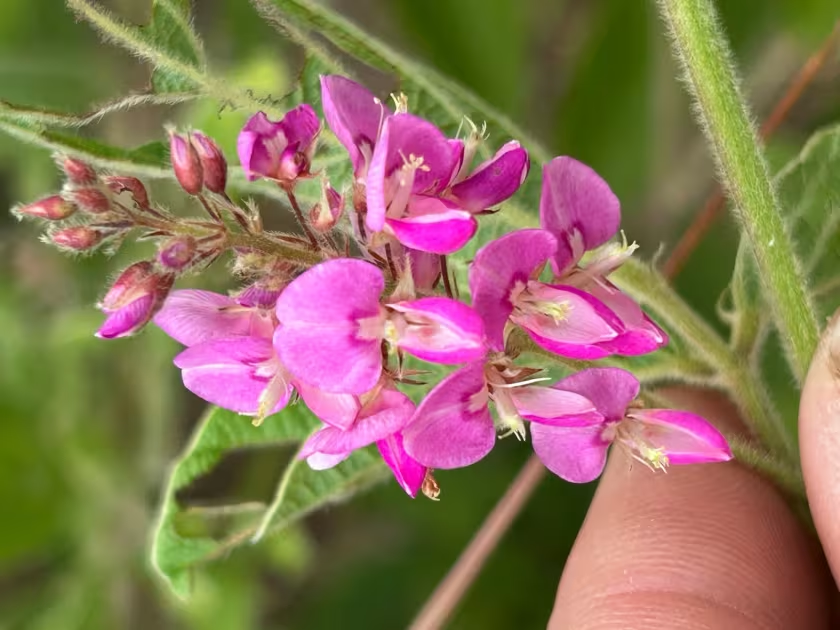
Description
Sowing dates
Pseudarthria hookeri is a perennial legume primarily sown at the onset of the rainy season in tropical regions. Proper timing is critical, as seeds require consistent moisture and warm temperatures between 20 and 25 degrees Celsius to ensure uniform germination across the field.
For optimal results, seeds should be sown at a shallow depth of approximately 1 to 2 centimeters. Because the seedlings exhibit slow early growth, the soil must be prepared well in advance by removing existing weeds to prevent early-stage competition that could stunt the crop's establishment.
Planting can be performed using either drilling in rows, which is preferred for hay production, or broadcasting for pasture development. Row spacing of 30 to 50 centimeters is generally considered ideal to facilitate weed management while ensuring sufficient plant density for maximum biomass yield.
Post-sowing soil compaction is an essential step to enhance the soil-to-seed contact. This practice is vital in tropical climates where soil surface moisture can evaporate rapidly, potentially leading to desiccation of the germinating seeds before the root system can penetrate deeper.
In addition to sowing, inoculation with compatible Rhizobium strains may be beneficial if the specific bacterial population is not already present in the soil. This ensures effective nitrogen fixation from the start, providing the plants with the necessary nutrients for robust development.
Growing requirements
Pseudarthria hookeri is well-regarded for its adaptability to various soil types, including those with low nutrient content or acidic pH levels. This resilience makes it an excellent candidate for improving marginal lands that are often unsuitable for more demanding agricultural crops.
The plant thrives in regions with adequate rainfall, although it displays a notable tolerance to brief periods of drought once the root system is well-established. Its ability to maintain greenery under moderate dry conditions makes it a valuable fodder source for livestock.
Regarding light requirements, this species is a sun-loving plant. It performs best in open, non-shaded areas where it can capture maximum sunlight for photosynthesis, which in turn directly translates into higher dry matter production and overall plant health.
The temperature requirements are strictly tropical, necessitating a frost-free environment to survive. Growth is optimal in stable, warm climates; any exposure to temperatures near or below freezing will result in significant damage or the death of the perennial plant structure.
- Excellent tolerance to acidic soil conditions.
- Effective nitrogen-fixing capabilities.
- Requires full sun exposure for optimal growth.
- Poor cold tolerance; suitable only for tropical/subtropical zones.
Yield
Yield potential is highly dependent on the availability of moisture and soil nitrogen levels. Under favorable conditions, the plant produces a dense and nutritious canopy, capable of providing several cuts per growing season, which significantly enhances farm productivity.
As a high-protein forage crop, it is highly sought after for feeding cattle, sheep, and goats. The foliage is generally palatable and digestible, offering an important source of essential amino acids that are often lacking in low-quality tropical pasture grasses.
To maximize yields, regular harvesting or controlled grazing intervals are recommended. These management practices stimulate regrowth and prevent the plant from becoming too woody or overly mature, which would otherwise decrease the nutritional quality of the forage.
While the legume improves soil fertility through nitrogen fixation, high-intensity management may occasionally require the application of phosphorus or potassium if soil tests indicate deficiencies. This ensures that the crop maintains its biomass output over several years.
Monitoring the plant maturity is crucial for yield management. Harvesting at the peak of the flowering phase provides the best balance between biomass quantity and protein content, ensuring that livestock receive optimal nutrition per unit of harvested fodder.
Main diseases and pests
Pests and diseases are the primary threats to Pseudarthria hookeri in tropical agricultural settings. Fungal infections, such as rust and leaf spot, frequently occur during prolonged wet seasons when humidity levels are high enough to promote spore growth.
Root rot pathogens pose a severe risk if the soil becomes waterlogged. Providing proper surface drainage is the most effective management strategy to mitigate this danger and ensure that the root systems remain healthy and free from anaerobic conditions.
Insects and various leaf-feeding larvae can damage seedlings during their early developmental phases. Integrated pest management, including crop rotation and the promotion of beneficial predator populations, is often superior to reliance on chemical pesticides.
Weed competition remains a significant challenge, especially during the first few months after planting. Keeping the field clean through mechanical weeding allows the crop to gain the necessary vigor to eventually shade out competing vegetation on its own.
Virus-carrying vectors may also impact the field's health. Early identification of symptomatic plants is critical for preventing the spread of diseases, allowing farmers to take corrective measures before the entire crop is compromised.
Harvesting
Hay production requires harvesting at the onset of flowering to maintain high protein levels and ensure optimal digestibility. Using mechanized equipment allows for efficient drying, which is essential to prevent mold growth in the humid conditions of tropical regions.
If the crop is utilized as standing hay or direct pasture, rotational grazing must be implemented. Moving livestock frequently prevents overgrazing and allows the plants to recover their energy reserves, thereby extending the lifespan of the legume stand.
For seed production, the pods must be harvested when they reach maturity but before they begin to shatter and drop their seeds. This requires careful observation and timing to capture the full seed harvest potential without substantial field losses.
Storage of the finished forage should be in a dry, well-ventilated structure to protect it from environmental degradation and pest infestation. Proper storage practices preserve the color and nutrient profile, ensuring high-quality feed throughout the dry season.
After harvesting or the end of a grazing season, removing coarse residue can help prepare the ground for future regrowth. Regular maintenance of harvesting cycles is the key to achieving sustainable long-term yields from this versatile tropical legume.