
Nanking cherry
Prunus tomentosa thunb x P. cerasifera
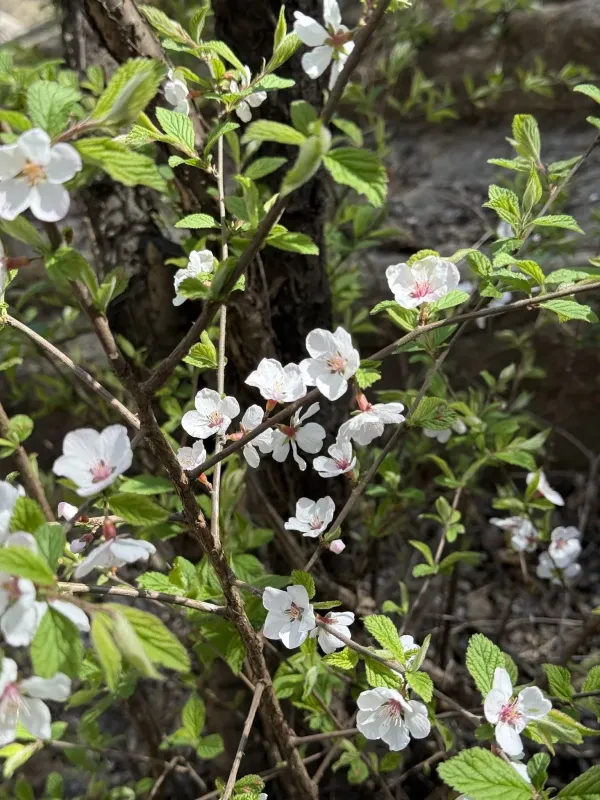
Description
Growing requirements
The Nanking cherry (Prunus tomentosa) is a member of the Rosaceae family. It is a dense, deciduous shrub characterized by its velvety, pubescent leaves and stems, which distinguish it from common cherry trees.
Native to East Asia, this shrub has become a popular ornamental and edible crop in many temperate regions. It is highly valued for its extreme cold hardiness, often surviving temperatures well below -30 degrees Celsius.
Cultivation requires well-drained, fertile soil with a neutral pH. The shrub performs best in full sun, as shading can significantly reduce fruit production and increase the risk of foliage diseases.
Proper pruning is essential for maintaining the health of the plant. Since Nanking cherries bear fruit mostly on new growth, thinning out older branches encourages vigorous annual shoots.
While the plant is quite resilient to climate stresses, it requires consistent care during the early stages of establishment. Regular weeding and moderate watering are recommended during the first few years.
Yield
The yield is typically high, with a single mature shrub producing several kilograms of small, bright red berries. The fruit is juicy, sweet-tart, and ideal for jams, jellies, and fresh consumption.
Main diseases and pests
The most significant threat is brown rot, a fungal disease that targets blossoms and shoots during cool, wet spring weather. Maintaining good airflow through pruning helps minimize disease pressure.
Harvesting
Harvesting is performed manually as the cherries ripen uniformly. The fruit is highly perishable, so it should be handled with care and processed or refrigerated immediately to maintain its quality.