
Japanese plum
Prunus salicina x Prunus spinosa
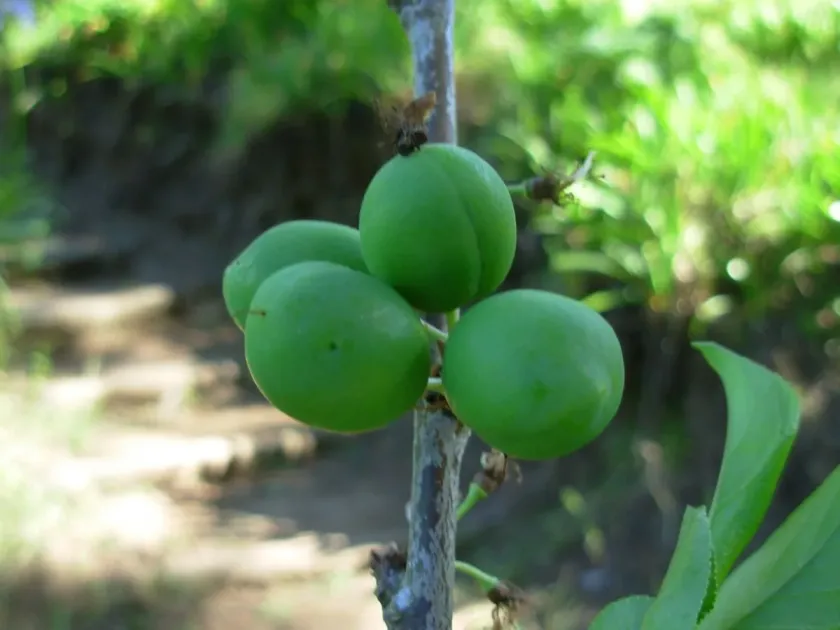
Description
Sowing dates
Planting Japanese plum (Prunus salicina) saplings is best performed in the early spring, before the buds begin to swell. This timing allows the root system to establish itself before the onset of the summer heat.
In regions with milder climates, autumn planting is also an option, provided the soil remains workable for a few weeks to allow for initial root growth. Proper site selection is crucial for the survival of young trees.
When preparing the planting site, dig a hole wide enough to accommodate the root system comfortably. Adding organic matter like compost improves soil structure and provides initial nutrients for the developing tree.
Spacing between trees is essential to ensure adequate airflow and sunlight penetration. Depending on the rootstock, a distance of 3 to 4 meters between trees is generally recommended to prevent overcrowding.
After planting, water the tree deeply to settle the soil around the roots and apply a layer of mulch to conserve moisture and suppress unwanted weed growth.
Growing requirements
The Japanese plum is a member of the Rosaceae family that thrives in full sunlight. It prefers well-drained, fertile soil, ideally with a slightly acidic to neutral pH balance for optimal nutrient uptake.
Good soil drainage is vital for this species, as it is sensitive to waterlogged conditions which can lead to root rot. If the soil is clay-heavy, consider planting on raised mounds to improve aeration.
Regular pruning is a fundamental aspect of maintaining healthy Japanese plum trees. By managing the canopy shape, you ensure better sunlight distribution and simplify the harvesting process later on.
Adequate moisture management is required, especially during the fruit development stage. While the tree can tolerate short dry spells, supplemental irrigation is necessary to prevent fruit drop and small size.
Apply balanced fertilizers in the spring to encourage vigorous vegetative growth, and switch to phosphorus-rich options in the late summer to support wood hardening before winter dormancy.
Yield
Japanese plum trees are highly prized for their precocity and heavy yields. Many cultivars start producing fruit as early as their second or third year, provided the site conditions are suitable.
Cross-pollination is often necessary, as most Prunus salicina varieties are not fully self-fertile. It is advisable to plant at least two different but compatible varieties to maximize the fruit set.
The harvest cycle varies depending on the specific cultivar, but generally provides a generous supply of high-quality fruit. Consistent care and proper nutrient management lead to larger and more flavorful plums.
In years of bumper crops, limbs may become heavily laden. Using support structures or thinning the fruit during the early development stage prevents branch breakage and improves the final quality of the harvest.
The harvested fruit is versatile and widely used for fresh consumption, as well as in culinary applications such as jams, preserves, and juices, contributing to its commercial value.
Main diseases and pests
The primary threats include fungal diseases like brown rot (Monilinia) and bacterial spot, which can impact foliage and fruit quality. Maintaining orchard hygiene is the best first line of defense.
Common pests like the plum curculio and aphids can significantly reduce yields. Integrated pest management, involving monitoring and timely application of insecticides, is recommended for healthy tree development.
Proactive winter sanitation, including the removal of mummified fruit and dead wood, significantly lowers the potential for pathogen outbreaks in the coming spring.
Cold winter temperatures can sometimes cause frost cracks on the trunks of younger trees. Wrapping the trunk with protective material or painting it with white latex can mitigate these solar-related injuries.
Always inspect the tree for signs of insect infestation or disease during the growing season to ensure timely intervention and maintain the long-term health of your orchard.
Harvesting
Harvesting should be done carefully to avoid bruising the delicate skin of the plums. It is best to pick fruit in the early morning when temperatures are lower, which helps keep the fruit firm.
Fruit intended for market or long-term storage should be picked at the firm-ripe stage. Handling the fruit gently is important, as Japanese plums have a relatively thin skin compared to other species.
Sort the fruit immediately after harvest to remove any damaged or overripe specimens. Separating high-quality fruit from culls prevents the spread of rot and preserves the value of the harvest.
Proper storage is essential; keeping the fruit at low, stable temperatures in well-ventilated containers significantly extends their shelf life and maintains their flavor profile.
Regular harvesting prevents fruit from dropping to the ground, which reduces the attraction of unwanted pests and helps keep the orchard floor clean and disease-free.