
Japanese plum
Prunus salicina x Prunus mume
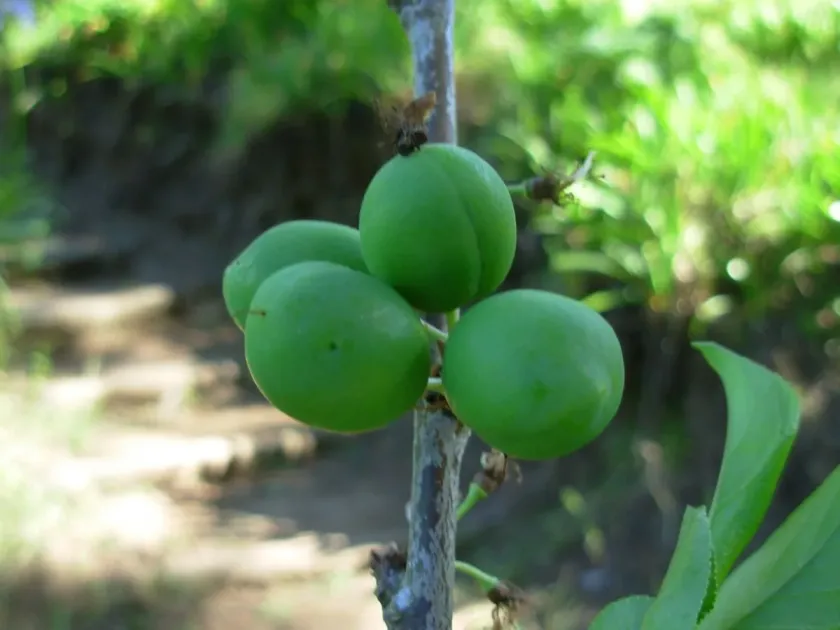
Description
Growing requirements
The Japanese plum (Prunus salicina) is a deciduous tree belonging to the Rosaceae family. Native to China, it has been widely cultivated across East Asia and, later, in Western orchard systems due to its superior fruit quality.
The tree thrives in well-drained, fertile soil with a slightly acidic to neutral pH. It requires a sunny location, ideally with protection from strong winds that could cause damage to blossoming branches.
Climatic requirements involve moderate humidity and a distinct dormancy period. While some cultivars are cold-hardy, the tree generally prefers temperate climates and is sensitive to extreme fluctuations in late spring temperatures.
Agrotechnical practices center on pruning, as the species tends to produce vigorous growth. Training the tree into an open-center or vase shape improves light penetration and airflow throughout the canopy.
Soil management should focus on maintaining adequate moisture levels. During dry periods, irrigation is essential to ensure fruit development and prevent premature fruit drop, while mulch helps regulate soil temperature.
Yield
The Japanese plum is highly productive, often bearing fruit within 3 to 4 years of planting. Under optimal management, a mature tree yields a substantial harvest annually.
Cross-pollination is a key factor for success, as many varieties are self-sterile. Planting compatible pollinator cultivars in close proximity significantly improves total orchard yield.
Thinning fruit is a necessary practice during high-yield seasons. By removing excess fruitlets early, the tree channels energy into developing larger, higher-quality plums for the market.
Nutrient management through balanced fertilization is critical. Regular application of nitrogen, phosphorus, and potassium supports both tree structural health and fruit development.
Thanks to genetic improvement, modern varieties offer extended harvest windows, allowing producers to satisfy market demand over a longer period during the summer months.
Main diseases and pests
Common diseases affecting this culture include brown rot (Monilinia) and bacterial spot. These pathogens thrive in humid conditions and can cause significant damage to flowers, twigs, and maturing fruit.
The plum curculio and oriental fruit moth are the most destructive insect pests. Integrated Pest Management (IPM) strategies, including pheromone traps and targeted spraying, are essential for mitigation.
Scale insects and aphids can also affect tree vigor. Monitoring the canopy during the growing season is necessary to apply timely control measures before infestations become severe.
Sanitation is a cornerstone of disease control. Removing and disposing of mummified fruit and pruning dead or diseased branches prevents the overwintering of fungal spores.
- Applying dormant oils in late winter to manage overwintering mite eggs and scale insects.
- Regularly cleaning tools between trees to prevent the mechanical transmission of bacterial diseases.
Harvesting
Harvesting is performed manually to preserve the fruit's integrity. Since Japanese plums can have delicate skins, careful handling is mandatory to prevent bruising and long-term storage issues.
Fruit intended for shipping is typically harvested at the firm-ripe stage. This allows for transit time while ensuring that the fruit reaches the consumer in optimal condition.
Cold storage is vital immediately after harvest to slow ripening. Keeping the fruit at temperatures near 0 to 2 degrees Celsius significantly extends its shelf life.
Consistency in harvesting is important; fruit should be picked throughout the season as it reaches the desired stage of color development and sugar concentration for the specific market.
Sorting and grading should occur shortly after picking. Damaged or overripe fruit must be removed promptly to prevent the spread of decay to healthy produce in storage containers.