
Bell-flowered cherry
Prunus cerasoides D. Don var. campanulata (Maxim.) Koidz.
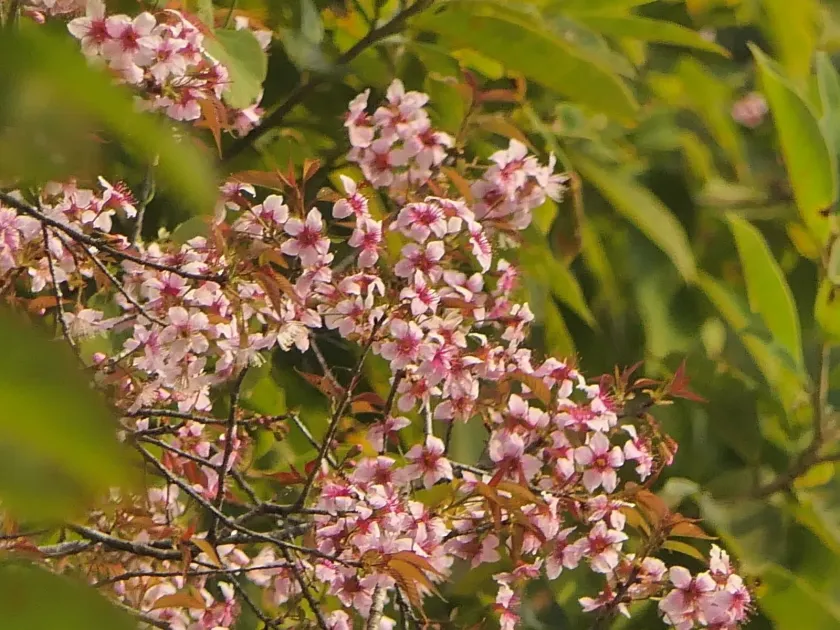
Description
Growing requirements
The bell-flowered cherry (Prunus cerasoides var. campanulata) is a member of the Rosaceae family. It is a stunning deciduous tree, native to the mountainous regions of East Asia, widely recognized for its pendulous, bell-shaped flowers.
Climatic requirements are specific to the species' subtropical origins. It thrives in mild climates and lacks cold hardiness for severe winters, making it suitable for protected garden locations or warmer horticultural zones.
The soil should be fertile, slightly acidic, and most importantly, well-draining. This cherry species struggles in heavy, waterlogged clay soils, which often lead to root asphyxiation and eventual decline of the tree.
Sunlight exposure is essential for the healthy growth and blooming potential of the tree. A minimum of six hours of direct sunlight daily is recommended to ensure vibrant flowering and healthy foliage development throughout the growing season.
In terms of хозяйственного (economic) use, the plant is primarily an ornamental asset. It is a signature species for landscape designers in regions where its early, intense pink-to-red flowering cycle provides a unique seasonal spectacle.
Main diseases and pests
Susceptibility to fungal pathogens such as brown rot and leaf spot is a significant concern, especially during seasons with high humidity and prolonged rainfall in the late spring period.
Pest pressures often involve infestations of aphids and various scale insects. These pests can weaken the plant by feeding on sap and often serve as vectors for secondary bacterial infections.
Bacterial canker is a serious threat that can cause trunk damage and gum exudation. Managing this requires keeping the tree vigorous and avoiding mechanical damage to the bark during pruning.
Cultural practices such as proper mulching and balanced irrigation are essential. Providing adequate spacing between trees ensures better airflow and helps mitigate the spread of air-borne diseases.
Integrated Pest Management (IPM) strategies, including dormant oil sprays and selective pruning, are the most effective ways to maintain the aesthetic and physical integrity of the tree.