
Almond
Prunus amygdalus x Prunus persica
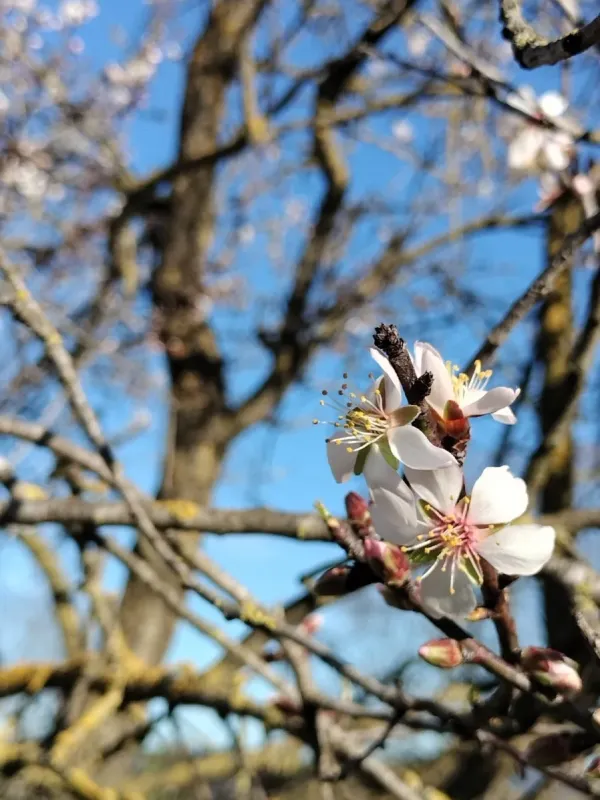
Description
Sowing dates
Commercial almond planting is typically carried out using grafted saplings in the spring, once soil temperatures reach 10-12 degrees Celsius, or in autumn before the onset of frost.
Selecting high-quality grafted saplings is essential for commercial orchards, as seed propagation does not guarantee varietal consistency and delays the onset of fruit production.
Planting patterns depend on the vigor of the rootstock and soil fertility, generally ranging from 5x5 to 6x6 meters to ensure optimal light penetration throughout the canopy.
It is crucial not to bury the root collar during planting, keeping it 3-5 centimeters above the soil level to prevent bark rot and other physiological issues.
Immediate irrigation following planting and mulching the root zone with organic materials are standard practices to retain soil moisture during the critical establishment phase.
Growing requirements
Almonds, members of the Rosaceae family, are heliophilic and thermophilic crops that require significant sunshine and specific accumulated heat units during the growing season.
The crop thrives in loose, well-aerated loam or sandy loam soils, preferring a neutral to slightly alkaline pH level ranging between 7.0 and 8.0.
While almonds have deep root systems providing moderate drought tolerance, consistent irrigation is necessary during flowering and fruit development to ensure high-quality yields.
The orchard site must be well-drained, as waterlogging is detrimental to almond trees, often leading to root decay and overall loss of tree vigor or death.
Selecting a location shielded from cold northern winds and late spring frosts is vital, as frost can destroy flower buds and severely impact seasonal productivity.
Yield
Commercial almond yields fluctuate significantly based on the specific variety, local climatic conditions, and the intensity of implemented agronomic practices.
Orchards typically begin producing a commercial crop between the fourth and sixth year, reaching peak productivity by the tenth to twelfth year of growth.
On average, high-intensity orchards can yield between 1 and 2 tons of kernel per hectare when proper nutritional management and plant protection protocols are strictly followed.
The utility of the almond crop spans the confectionery, food processing, and cosmetic industries, alongside the production of premium almond oil.
Sustainable productivity relies heavily on the presence of cross-pollinating varieties, as most commercial almond cultivars are self-incompatible and require cross-pollination for fruit set.
Main diseases and pests
Key diseases affecting almond production include brown rot and cercospora leaf spot, both of which cause twig dieback and premature foliage drop during the summer season.
Trees are also susceptible to rust and scab, which reduce the total photosynthetic capacity of the plant and weaken the tree's immune system over time.
The almond seed wasp is a critical pest, as its larvae develop within the nut, rendering the produce commercially unmarketable and causing significant economic loss.
Aphids, spider mites, and the plum fruit moth are constant threats that necessitate regular monitoring and timely applications of targeted insecticides.
Implementing sanitary pruning practices to remove infected branches, combined with preventative autumn sprays using copper-based products, is essential for disease management.
Harvesting
Harvesting begins once the hull splits naturally, and the inner shell separates easily from the fleshy covering, typically occurring during the late summer or early autumn months.
In large-scale operations, harvesting is highly mechanized, utilizing tree shakers to dislodge the nuts onto collection canvases, thereby minimizing direct contact with the ground.
Immediate hulling after harvest is required to prevent mold development and kernel degradation caused by residual moisture in the hulls.
Drying is performed either via sun-drying or in industrial dehydrators until the kernel moisture content is reduced to 6-8 percent for safe, long-term storage.
Stored shelled almonds require cool, dry, and well-ventilated environments to maintain nutritional value, flavor profile, and commercial appeal for up to a year.