
Almond
Prunus amygdalus x Prunus blireiana
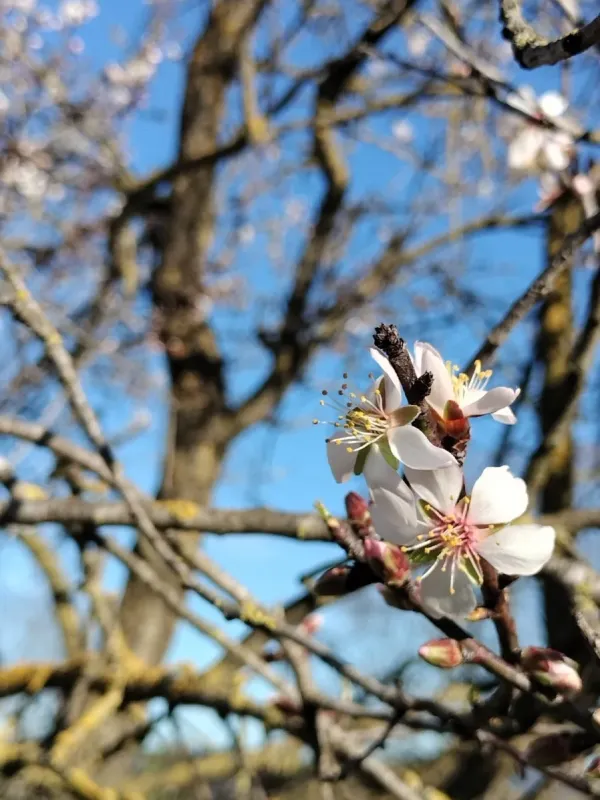
Description
Sowing dates
Almond (Prunus amygdalus) is a deciduous tree belonging to the Rosaceae family. In commercial agriculture, it is typically propagated through grafting onto suitable rootstocks to ensure genetic uniformity and disease resistance. The ideal planting time is during the autumn dormancy period, which allows the root system to establish before spring growth begins.
In colder climates, planting can occur in early spring before bud break. While seed propagation is possible, it involves a stratification process for 2–3 months at low temperatures; however, this method is rarely used commercially as the resulting trees do not reliably reproduce the desirable characteristics of the parent variety.
Selecting the right site is crucial: almonds require full sun and protection from strong, cold winds. The recommended spacing between trees varies from 5 to 7 meters, depending on the vigor of the specific variety and the orchard's management style.
Regular pruning is essential for almond health and productivity. Yearly maintenance pruning helps to shape the canopy, improve airflow, and remove dead or diseased wood, which prevents the build-up of fungal pathogens within the orchard.
Irrigation management is vital, especially during the nut-filling stage. Although almond trees are relatively drought-tolerant, supplementary watering during dry periods ensures larger nuts, better kernel fill, and higher overall yields.
Growing requirements
Almond trees thrive in well-drained, sandy loam or loamy soils with neutral to slightly alkaline pH levels. Heavy, clay-based soils that retain too much moisture are unsuitable, as they significantly increase the risk of crown and root rot diseases.
The climate requirement is specific: almonds need long, hot, dry summers to mature the nuts properly. They are susceptible to late spring frosts, which can kill the blossoms and cause total crop failure, making site selection critical for frost avoidance.
Optimal temperature for active growth ranges between 20°C and 25°C. The water table should be deep, at least 1.5 to 2 meters, to accommodate the tree's extensive taproot system and prevent waterlogging issues.
Since most commercial almond varieties are self-incompatible, cross-pollination is necessary. Orchard design must include compatible pollinizer varieties, and the presence of healthy honeybee populations during the flowering window is non-negotiable for fruit set.
Nutrient management involves nitrogen applications during the early vegetative stage, while phosphorus and potassium are typically provided post-harvest to support root development and enhance the tree's hardiness for the upcoming winter.
Yield
Commercial almond production usually begins 4 to 6 years after planting, depending on the rootstock and care. The trees reach peak productivity between 10 and 20 years of age, remaining commercially viable for several decades under good conditions.
Average yields range from 5 to 15 kilograms of shelled kernels per mature tree. Variations in yield depend heavily on the orchard density, the efficiency of pollination, and the absence of climatic stressors during the critical spring bloom.
The harvest cycle begins when the hull (the outer green covering) splits, exposing the hard shell. This physiological change indicates that the nuts have matured and are ready to be removed from the tree.
Post-harvest processing involves hulling the nuts immediately. Following hulling, the nuts are dried to a moisture content of 8–10% to prevent mold and rancidity during storage, ensuring long-term shelf stability.
Almonds are highly valued for their nutritional profile, being rich in monounsaturated fats, proteins, and minerals. They are used extensively in the confectionery industry, baking, plant-based milk production, and the cosmetic sector.
Main diseases and pests
Common pests include the almond seed wasp (Eurytoma amygdali), plum curculio, and various aphids. The almond seed wasp is particularly destructive, as the larvae feed inside the kernel, leading to significant yield loss and fruit drop.
Major fungal diseases include blossom blight (Monilinia), shot-hole fungus, and various wood decay pathogens. These diseases can severely impact both the tree's structure and the quality of the nuts if left uncontrolled.
Integrated Pest Management (IPM) is the standard approach, involving the use of pheromone traps, timely fungicide applications before and during bloom, and cultural practices such as removing mummified nuts that harbor pathogens.
Sanitation is key; all infected wood and fruit debris must be removed and destroyed to reduce the inoculum level in the orchard. Keeping the ground clean beneath the trees prevents the overwintering of several pests and diseases.
Regular orchard monitoring is necessary to detect outbreaks early. Chemical treatments, when required, should be applied with precision to minimize the impact on beneficial insects and to adhere to safe pre-harvest interval guidelines.
Harvesting
Harvesting usually takes place in late summer or early autumn. The primary indicator for the start of harvest is when the hulls split and dry out, allowing the nuts to be easily released from the branches.
Mechanized harvesting is common in large operations, using tree shakers to drop the nuts onto catching frames or swept-up windrows. This method is highly efficient and minimizes the physical damage to the fruit.
Prompt hulling is critical; delays in removing the hull can result in stained shells and an increased risk of fungal infection, both of which degrade the product's market value significantly.
Stored almonds must be kept in cool, dry, and well-ventilated conditions to maintain freshness. Proper storage prevents the oils in the kernel from going rancid, allowing for high-quality produce for up to two years.
For international trade, nuts are graded, sorted, and packed in moisture-resistant containers. Quality control at this stage is essential to meet the strict standards required for the export and retail markets.