
Silk red beech
Protorhus sericea Engl.
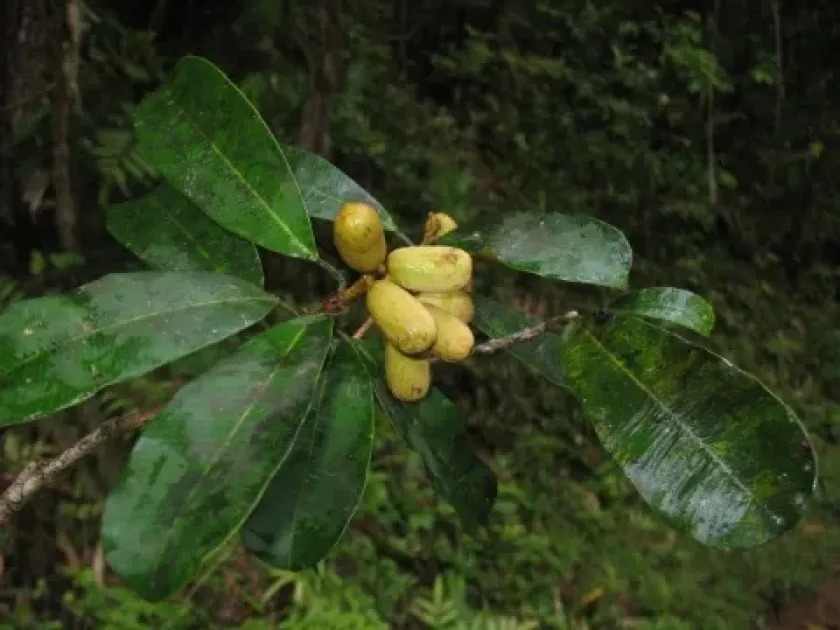
Description
Growing requirements
The silk red beech (Protorhus sericea) is a prominent member of the Anacardiaceae family. It is a robust evergreen tree, typically prized for its dense, glossy foliage and its role in ecological restoration in its native range.
Originating from South Africa, this species thrives in forest margins and coastal bushveld. Its distribution is closely linked to its ability to compete for sunlight in mixed evergreen environments, reaching impressive heights in favorable conditions.
Regarding soil requirements, the species performs best in deep, fertile soils that allow for rapid root penetration. While it exhibits moderate drought tolerance once established, it remains a water-responsive plant that flourishes under consistent moisture levels.
Climatic conditions for optimal growth are characterized by warm temperatures without prolonged frosts. In cultivation, protecting young saplings from harsh winds and extreme cold is essential for structural development and foliage retention.
The tree serves several purposes, including urban landscaping and windbreak protection. Its fruit production provides significant sustenance for diverse avian species, making it an excellent choice for promoting biodiversity in its natural habitats.
Main diseases and pests
Common pests include scale insects and various leaf-chewing larvae. Integrated pest management, focusing on early detection and spot-treatment, is generally sufficient to protect the health of the tree.
Fungal pathogens associated with overly dense canopy moisture can occasionally impact leaf health. Pruning the tree to ensure adequate airflow is a recommended practice to mitigate these physiological risks.