
Prometheum sempervivoides
Prometheum sempervivoides
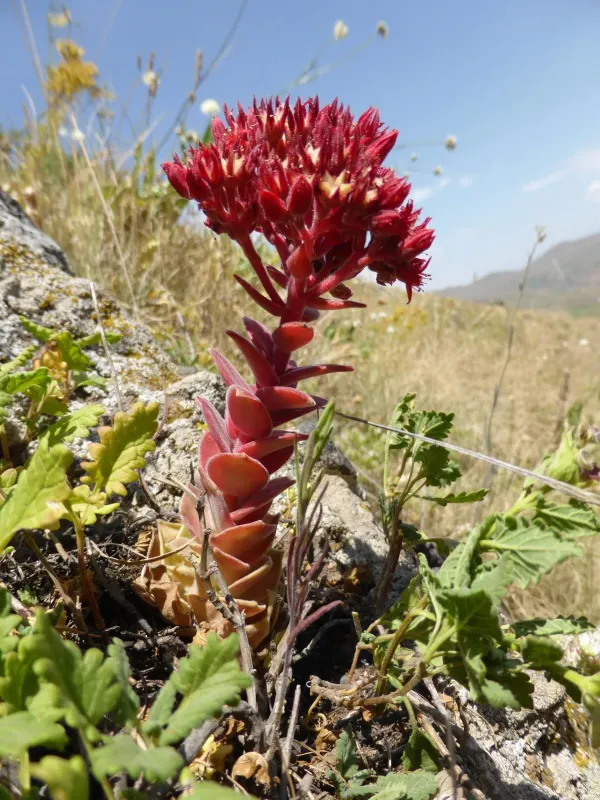
Description
Sowing dates
Prometheum sempervivoides is typically propagated vegetatively by detaching offsets or daughter rosettes from the mother plant during late spring or early summer.
Seeds can also be used for propagation; they should be sown on the surface of a light, sandy substrate and kept consistently moist until germination occurs.
Seedlings are delicate and require careful handling to avoid damping-off, which is a common issue for succulent species grown from seeds.
Transplanting into the garden should take place once the risk of frost has passed, ensuring that the young plants are placed in well-drained spots.
Providing sufficient spacing between individual rosettes encourages better air circulation and prevents the development of fungal diseases in the cluster.
Growing requirements
Prometheum sempervivoides is a hardy succulent belonging to the Crassulaceae family, native to the rugged, high-altitude regions of the Caucasus and Turkey.
The plant thrives in mineral-rich, stony, or sandy soils that possess excellent drainage capabilities, mimicking its natural rocky habitat.
Full sun exposure is crucial for maintaining the plant's characteristic compact, rosette shape and vibrant coloration throughout the growing season.
It is sensitive to excessive moisture; therefore, winter protection or elevated planting sites are recommended to prevent rot during periods of high rainfall.
Agrotechnical management is minimal, involving occasional watering during prolonged droughts and avoiding the use of nitrogen-rich fertilizers.
Main diseases and pests
The most significant threat to this culture is root rot, which typically stems from overwatering or poorly draining soil conditions in the cultivation area.
Pests are generally not a major concern; however, mealybugs may infest the plants if grown in stagnant air conditions, especially in greenhouse environments.
Preventive measures include using gravel mulch around the base of the plant to keep the foliage dry and preventing direct contact with the damp soil surface.
Inspecting the plants for signs of distress and removing any decaying foliage immediately can help stop the spread of potential pathogens.
Providing adequate sunlight and maintaining a dry environment are the most effective strategies for ensuring the longevity and health of the rosettes.