
Prinsepia utilis
Prinsepia utilis
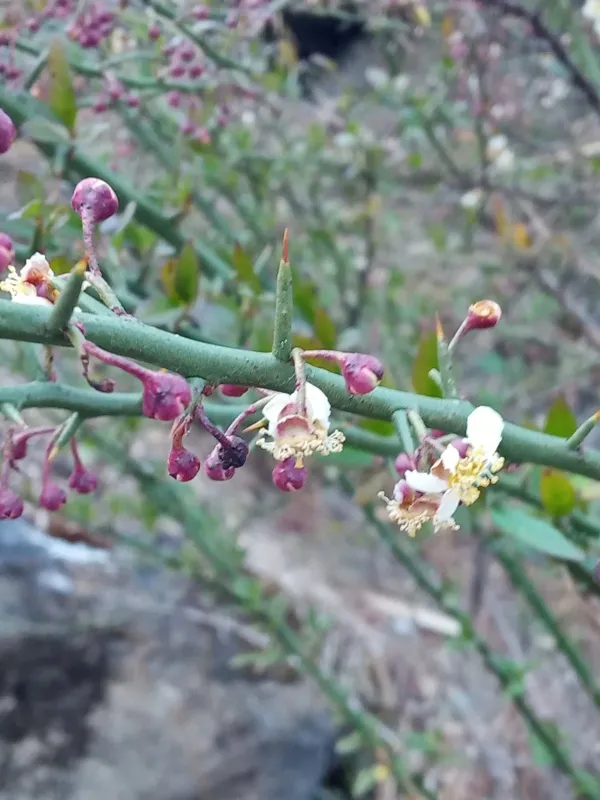
Description
Sowing dates
Propagation of Prinsepia utilis is primarily achieved through seeds or vegetative methods such as cuttings. Sowing seeds is best performed in late autumn for winter stratification, which significantly improves germination rates in the spring.
If seeds are kept until spring, they must undergo cold stratification at temperatures between 0 and 5 degrees Celsius for several months. This process is essential to overcome the deep embryo dormancy typical of Rosaceae family species.
For vegetative propagation, hardwood cuttings are collected in late summer or early autumn. These should be planted in a light, well-draining substrate under a temporary plastic cover to maintain consistent air humidity levels.
Transplanting to the permanent location should occur once a robust root system has developed. Prinsepia displays vigorous growth during its first few years, making it crucial to maintain a distance of at least 2 to 3 meters between plants to ensure full crown development.
The optimal time for planting seedlings outdoors is in early spring before active sap flow begins, or mid-autumn when the plant enters a period of relative dormancy.
Growing requirements
Prinsepia utilis is a deciduous shrub in the Rosaceae family, known for its high ecological plasticity. Originating from the Himalayan mountain regions, the plant is well-adapted to cooler climates.
The crop prefers sunny locations protected from strong winds, though it can tolerate light shading. Under conditions of high solar radiation, fruit production becomes more abundant, and the oil quality within the seeds is significantly improved.
Soil requirements are moderate: the plant thrives best in sandy or loamy soils with a neutral or slightly acidic pH. Proper drainage is a critical factor, as roots are sensitive to waterlogging and soil saturation.
The shrub possesses high winter hardiness, allowing it to be cultivated in temperate latitudes. Mature specimens can withstand short-term temperature drops down to -20 degrees Celsius or lower without sustaining major wood damage.
Agrotechnical management includes regular weeding of the root zone and mulching to conserve moisture. Mineral fertilizers should be applied during the growing season, focusing on potassium and phosphorus to enhance shoot maturation.
Yield
The economic value of Prinsepia lies in the production of valuable edible and industrial oil extracted from its fruit kernels. Oil content in the seeds reaches 35 to 40 percent, making the crop promising for small-scale commercial production.
Productivity depends heavily on the age of the plant and management practices. Upon reaching full maturity, usually in the 4th to 6th year of growth, each shrub is capable of producing a significant volume of succulent drupes suitable for processing.
Prinsepia fruits are dark red, rounded, or oval drupes. Harvesting requires caution as the plant's branches are armed with sharp thorns, which complicates the mechanization of the gathering process.
Prinsepia oil has a unique chemical profile, including high levels of unsaturated fatty acids. Its widespread use in traditional medicine and cosmetics stimulates interest among farmers in cultivating this species as a high-value raw material.
Beyond its oil-bearing potential, the shrub is frequently used in agroforestry as a honey plant, providing bees with an early spring forage, and as a structural plant for stabilizing eroding slopes.
Main diseases and pests
Prinsepia utilis is notably resistant to most pathogens common to garden crops. Nevertheless, failure to adhere to standard agrotechnical norms may lead to fungal infections caused by excessive humidity.
Potential threats include powdery mildew, which manifests as a white coating on young leaves. Prevention involves thinning out dense plantings to ensure proper air circulation throughout the canopy.
In some seasons, the shrub may face infestations of aphids or leaf-eating caterpillars. In the event of high pest pressure, treatment with bio-pesticides approved for berry crops is recommended.
Root rot is the most dangerous condition, occurring exclusively in heavy, waterlogged soils. The primary defense involves maintaining strict watering regimes and ensuring a quality drainage layer during planting.
Annual sanitary pruning is recommended to maintain the plant's health, focusing on the removal of dead or damaged branches that can become hubs for secondary infections.
Harvesting
Harvesting of Prinsepia fruits is conducted during the phase of full biological maturity when the drupes develop a deep color and become soft to the touch. The optimal harvest time usually falls in late summer or early autumn, depending on the specific region.
Due to the sharp thorns, the use of protective gloves is highly recommended. Fruits should be picked manually, removing them gently from the branches to avoid damaging the fruiting buds for the following year, which develop in the leaf axils.
After collection, the fruits require immediate preliminary processing. They should be separated from the pulp, which can be utilized for technical purposes, while the kernels must be washed and dried in a well-ventilated area until stable.
To prevent raw material spoilage, it is vital to avoid storing the fruits in thick piles. Adequate air circulation prevents self-heating and mold growth, which is critical for maintaining the quality of the final oil product.
Storage of cleaned kernels should be done in dry, dark containers. Under proper conditions, seeds retain their high oil content and germination viability for several consecutive seasons.