
Primulina tamiana
Primulina tamiana
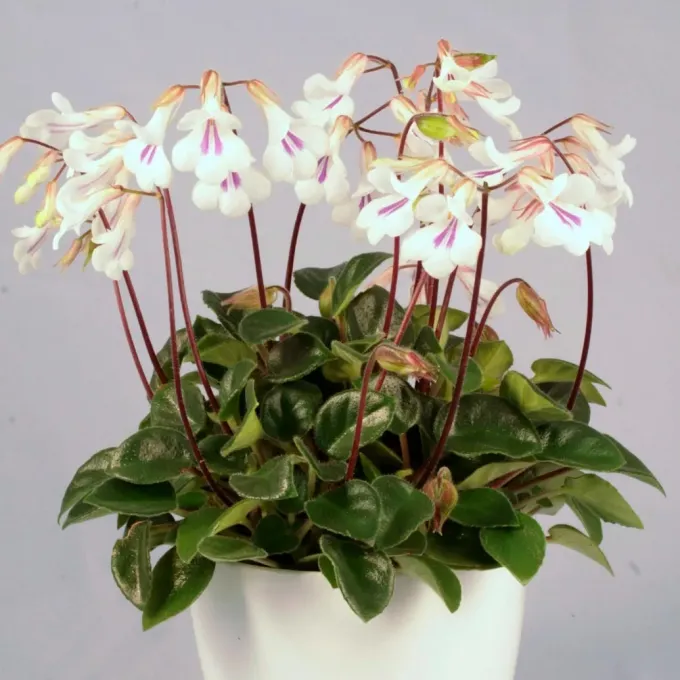
Description
Sowing dates
Propagation of Primulina tamiana is primarily achieved through leaf cuttings, which root effectively in a lightweight, well-draining medium. The best time for this process is during the active growth phase in late spring.
Seed propagation is also possible, though it requires precision due to the microscopic size of the seeds. They should be sown on the surface of damp, sterile soil and kept under a transparent cover to maintain high humidity.
When selecting leaf cuttings, choose healthy leaves from the middle of the plant. A clean cut with a sharp, sterilized blade is essential to prevent bacterial contamination at the base of the petiole.
Maintain temperatures between +22°C and +24°C for the rooting process. Keep the medium consistently moist but avoid waterlogging, as the petioles are highly susceptible to rot during the early stages.
Once small rosettes develop at the base of the leaf cutting, they can be carefully separated and potted individually. Ensure that the potting mix remains airy to support the development of delicate young roots.
Growing requirements
Primulina tamiana is an endemic species from Vietnam that thrives in bright, indirect light. Prolonged exposure to direct sunlight can severely scorch its succulent-like, slightly fuzzy leaves.
The plant prefers stable temperatures ranging from +20°C to +25°C during the growing season. It performs best in locations that are well-ventilated but free from cold or hot drafts.
Use a porous potting mix for optimal aeration. A combination of peat moss, perlite, and a small amount of fine bark or coco coir creates the ideal substrate for this Gesneriad.
Watering should be managed with care. Aim for the soil, not the center of the rosette, to avoid crown rot. Allowing the top inch of soil to dry out between waterings helps to maintain root health.
While the plant appreciates moderate humidity, it does not require constant misting. High humidity can sometimes lead to fungal issues if air circulation is poor, so balance is key.
Main diseases and pests
Fungal diseases are the primary threat, often caused by overwatering or poor air circulation. Root rot and leaf spotting are common signs of environmental stress that need immediate intervention.
Pests like spider mites and mealybugs can occasionally infest the plant, especially if the air is too dry. They tend to hide in the axils of the leaves or on the undersides of the foliage.
Regular monitoring of the plant’s health is necessary to catch infestations early. Using gentle horticultural oils or soap-based sprays is effective for controlling common indoor pests on this species.
In case of fungal outbreaks, promptly remove affected foliage and treat the plant with appropriate fungicides. Re-potting into fresh, clean substrate is recommended if the current soil remains waterlogged.
General hygiene, such as removing spent flowers and dead leaves, is essential. Keeping the plant area clean prevents the buildup of spores and provides a healthy environment for long-term growth.