
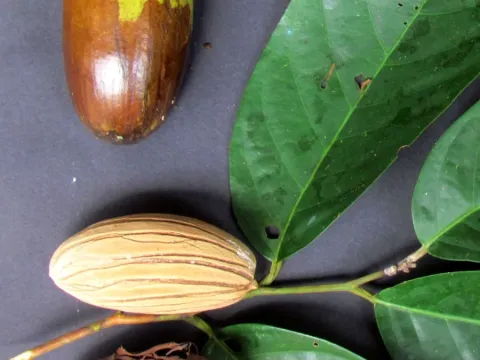
Potoxylon
Potoxylon
Potoxylon is a genus of evergreen trees belonging to the Lauraceae family. Known for its specific ecological niche, this tree thrives in the tropical rainforest environments typical of the Southeast Asian region, particularly Borneo.
What the section contains

Potoxylon
These trees require deep, well-drained soils rich in organic nutrients to support their slow growth pattern. They are highly sensitive to soil compaction and waterlogging, which can cause significant root stress and stunted development.
Climatic requirements are strictly limited to the equatorial zone, characterized by constant high temperatures and high annual rainfall. Potoxylon does not possess mechanisms to survive prolonged droughts or significant drops in temperature.
Agronomic management of Potoxylon is challenging due to the species' slow maturation rate. Cultivation efforts must focus on maintaining proper shading for saplings, which are prone to solar radiation damage when exposed prematurely.
The economic significance of Potoxylon is primarily attributed to its wood, which is dense, heavy, and naturally resistant to biological decay. Due to its superior durability, the wood has historically been utilized for demanding structural applications.
The primary threat to Potoxylon populations is the destruction of primary rainforests caused by land conversion. The species is unable to adapt to disturbed habitats, leading to a significant decline in naturally occurring trees.
Root rot pathogens represent the most common biological threat in nursery settings. These fungal infections occur most frequently when drainage is insufficient, often leading to rapid mortality of young tree stock.
Stem-boring insects are significant pests that affect mature Potoxylon individuals. These insects compromise the structural integrity of the timber, making the tree less suitable for high-end economic usage and increasing vulnerability to wind throw.
Lack of canopy management can leave saplings suppressed by more aggressive, fast-growing pioneer plant species. This competition prevents young trees from reaching a size where they can become self-sustaining components of the forest.
Conservation status is a major concern, as the species is not easily propagated via standard industrial methods. Without strictly regulated reforestation programs, the long-term survival of the genus remains precarious.