
Persea japonica
Persea japonica
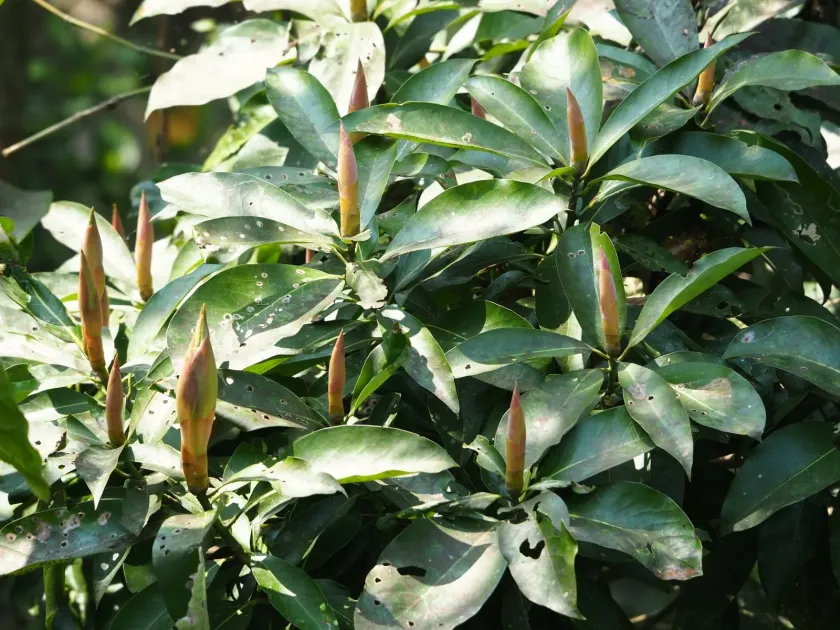
Description
Growing requirements
Persea japonica is a distinctive evergreen tree belonging to the Lauraceae family. Unlike its commercial cousin, the avocado, this species is primarily cultivated for its ornamental value and botanical interest in gardens and conservatories.
Native to the subtropical regions of East Asia, including Japan and Korea, the plant thrives in environments characterized by high humidity and moderate temperatures. Its natural habitat is typically found in forested areas with rich, well-drained soils.
Successful cultivation requires soil that is loose, acidic to neutral in pH, and highly permeable. Because the root system is sensitive to waterlogging, planting in raised beds or high-quality containers with effective drainage is strongly recommended.
In terms of climate, Persea japonica prefers stable, mild conditions. It is not cold-hardy, so in temperate zones, it must be protected from frost and harsh winds, typically being overwintered in greenhouses or indoor settings to maintain growth.
Maintenance practices should focus on maintaining adequate ambient humidity. Regular misting or the use of humidifiers is essential to prevent leaf desiccation, especially during the winter months when indoor heating can drastically reduce moisture levels.
Main diseases and pests
The most common health issues for Persea japonica stem from improper watering, which often leads to root rot caused by various Phytophthora species and other soil-borne pathogens.
Common pests include spider mites and scale insects, which often infest the leaves and stems. These pests thrive in dry environments, making humidity management a form of biological control.
Early detection of infestation is vital; growers should frequently inspect the undersides of leaves and the junctions of stems for signs of webs or waxy deposits typical of scale insects.
Chemical control can be implemented using systemic insecticides or horticultural oils; however, it is essential to ensure the plant is not in a drought-stressed state before application to avoid chemical burn.
Good cultural practices, such as providing adequate air circulation and removing any decaying organic matter from the soil surface, are the most effective strategies for preventing widespread outbreaks.