
Portlandia grandiflora
Portlandia grandiflora
Description
Growing requirements
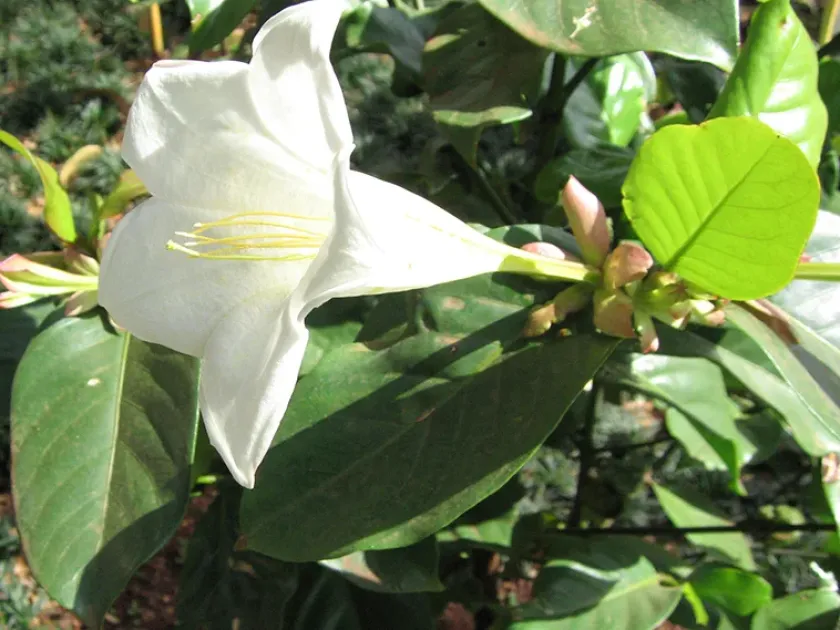
Portlandia grandiflora is a distinctive evergreen shrub within the Rubiaceae family, widely admired for its large, fragrant, white trumpet-shaped flowers. This plant is a true exotic specimen, often cultivated for its aesthetic appeal in botanical gardens and private collections.
Originating from the Caribbean, particularly Jamaica, this plant thrives in warm, humid, tropical climates. Due to its sensitivity to cold, it is strictly an indoor or greenhouse plant in non-tropical regions, requiring consistent ambient temperatures year-round.
The ideal growing medium for this culture is a well-draining, nutrient-rich soil mix with an acidic to neutral pH level. Proper aeration of the root zone is critical; therefore, incorporating perlite or pumice into the soil mixture is standard agricultural practice for containerized plants.
Light requirements are quite specific: the plant demands bright, indirect sunlight to thrive. Excessive exposure to direct sun can scorch the glossy leaves, while insufficient light significantly hinders bloom production. Keeping humidity levels between 60% and 80% is essential for healthy development.
Fertilization should be applied regularly during the active growing season using a balanced fertilizer. Periodic pruning is necessary not only for shaping but also to encourage a denser branch structure, which promotes more profuse flowering in the following season.
Main diseases and pests
The primary pests affecting this crop include spider mites, mealybugs, and scale insects, which often thrive in the controlled environments of greenhouses. Monitoring the undersides of leaves is a crucial step in early detection and management of these infestations.
Pathogen threats are generally linked to cultural errors, specifically overwatering leading to fungal root rots. Maintaining a clear drainage path and avoiding water stagnation are the most effective preventative measures against these common plant threats.