
Polyscias fulva
Polyscias fulva (Hiern) Harms
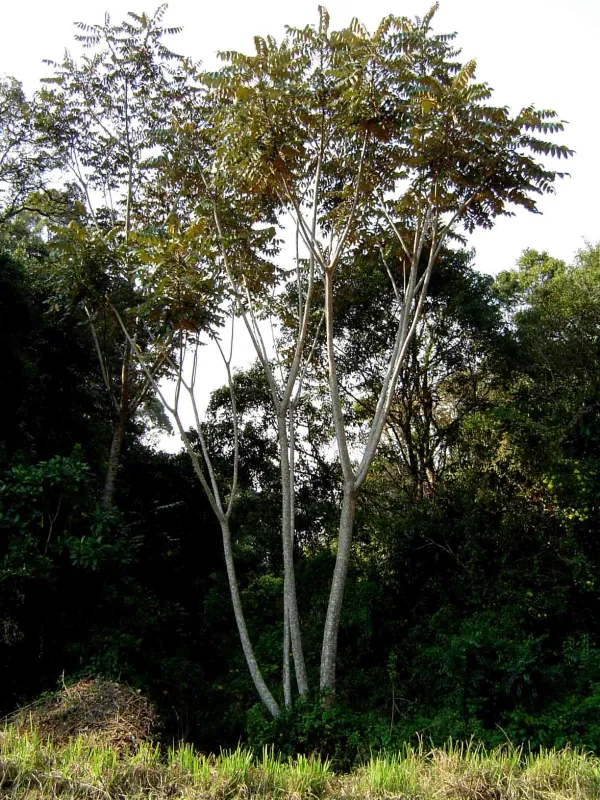
Description
Growing requirements
Polyscias fulva is a rapidly growing tree species native to the tropical forests of Africa, belonging to the Araliaceae family. Known for its ability to colonize secondary forest areas quickly, it serves as an important ecological pioneer in forest restoration projects.
The tree thrives in environments with high humidity and consistent tropical temperatures. It is commonly found at altitudes ranging from 600 to 2500 meters, which demonstrates its remarkable adaptability to various mountainous climatic conditions.
Regarding soil requirements, Polyscias fulva prefers deep, fertile, and well-drained soils rich in organic matter. While it is adaptable, it performs poorly in waterlogged soils, making proper drainage management a priority in plantation design.
The plant demands high levels of light for optimal growth, especially in its mature stages. When cultivated in nurseries, seedlings require moderate shading, but as they establish, they should be moved to full exposure to encourage robust trunk development.
Agronomic practices focus on maintaining adequate spacing between individual trees to ensure sufficient airflow. Given its spreading canopy, spacing of 4 to 6 meters is generally recommended to prevent the spread of diseases and maximize growth efficiency.
Yield
The primary industrial use of Polyscias fulva is timber production. Its wood is categorized as lightweight and relatively soft, making it suitable for manufacturing plywood, crates, boxes, and various light carpentry products.
Beyond timber, this tree is highly regarded in the beekeeping industry. Its blossoms provide a significant source of nectar, making it a valuable species for apiaries integrated into tropical agricultural landscapes.
Traditional uses include the medicinal application of its bark and leaves by local communities. This diversification of use adds significant economic value, especially for small-scale rural farmers who utilize the tree for multiple purposes.
As a fast-growing species, it is often utilized in agroforestry for windbreaks and erosion control. Its root system helps stabilize soil on slopes, protecting adjacent crop fields from degradation and environmental stress.
Environmental benefits are also noteworthy; the tree supports local biodiversity by providing habitat for various bird species and insect pollinators, which contributes to the overall stability of the surrounding farm ecosystem.
Main diseases and pests
Fungal infections remain the most common threat to Polyscias fulva, particularly in environments with high rainfall and poor air circulation. Proper sanitation and spacing are the primary methods for mitigating these risks effectively.
Insects and certain leaf-eating pests can damage young saplings in nursery settings. Integrated pest management, focusing on biological controls, is preferred over the widespread use of chemical pesticides to maintain environmental balance.
The tree is susceptible to infestation by hemiparasitic plants like mistletoe. Regular field inspections are necessary to identify and remove these parasites before they can significantly impact the health and wood quality of the host tree.
Damage to the roots during soil cultivation can create entry points for soil-borne pathogens. Operators should take care when working near the root zones of mature trees to prevent mechanical injury and potential disease spread.
Although the species is resilient, prolonged droughts can retard its growth rate. In commercial plantations, implementing supplementary irrigation during dry seasons is recommended to maintain the rapid growth cycles required for economic timber output.