
Pogonopus exsertus
Pogonopus exsertus
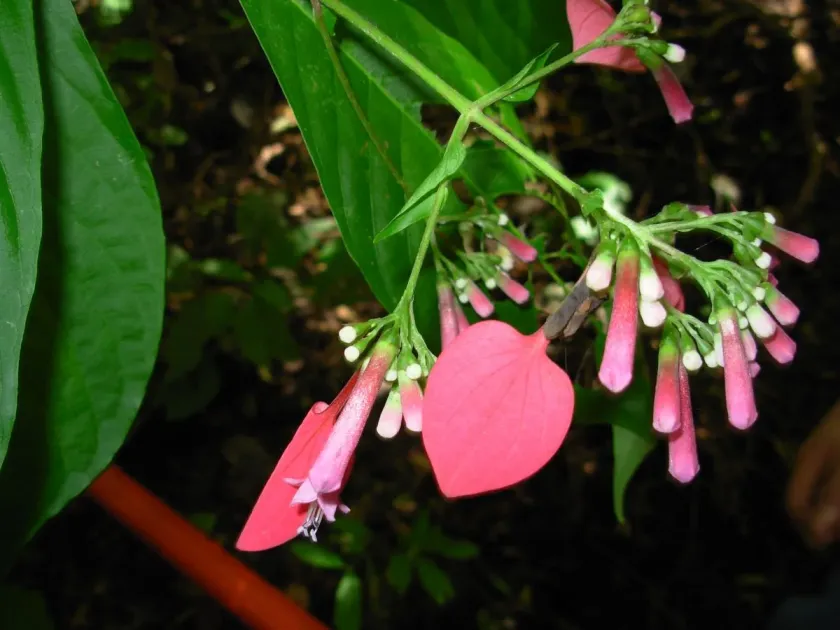
Description
Growing requirements
Pogonopus exsertus is a distinctive woody plant belonging to the Rubiaceae family. It is native to tropical regions of Central and South America, where it typically thrives in humid forest environments and disturbed secondary growth areas.
This species requires specific environmental conditions to thrive, including high ambient humidity and consistently warm temperatures. It is well-adapted to tropical climates and does not possess high tolerance for frost or prolonged drought, which can severely hinder its health.
Botanically, the plant is noted for its showy, enlarged calyx lobes that persist during the flowering phase. The leaves are generally opposite with entire margins, reflecting the structural characteristics common to many members of the diverse Rubiaceae family.
Cultivation requirements involve providing well-drained, nutrient-rich soil that mimics its natural forest floor habitat. Proper spacing is essential to ensure adequate airflow and light penetration, which helps in preventing fungal diseases common in dense, high-humidity growing environments.
While primarily recognized for its ornamental value in tropical landscaping, the species represents an important part of the local biodiversity. Research into its chemical constituents continues, as many related Rubiaceae species are known for producing complex alkaloids with medicinal potential.