
Podostemum pterophyllum
Podostemum pterophyllum
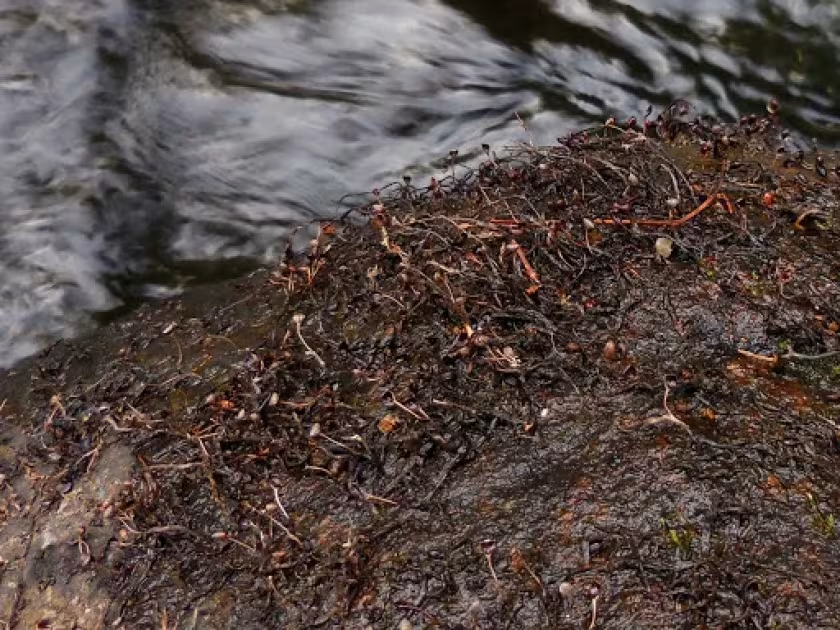
Description
Growing requirements
Podostemum pterophyllum is a specialized aquatic plant belonging to the Podostemaceae family. Often referred to as river-weeds, these plants exhibit a remarkable evolutionary adaptation to high-velocity water currents found in North American river systems.
The morphology of this plant is highly distinct, featuring a thalloid body that adheres to rocks using specialized holdfasts. It lacks typical roots and shoots, representing an extreme example of adaptation to life on submerged rocks in aerated, fast-moving waters.
Optimal growth requires clean, oxygen-rich water with a consistent current. The species acts as an ecological indicator for river health, as it is highly intolerant of sedimentation, water pollution, and disruption of natural flow regimes by man-made structures.
While not a traditional agricultural crop, the species is essential for the stabilization of riverbeds and serves as a vital component in local aquatic food webs, providing habitat for various macroinvertebrates.
Cultivation of this plant is challenging and primarily performed in controlled research environments. It requires sophisticated flow-through aquarium systems that mimic the turbulent conditions of its native habitat to sustain metabolism and facilitate life cycle progression.
Main diseases and pests
The primary threat to Podostemum pterophyllum is the alteration of river morphology. Large-scale dam construction creates reservoirs that replace flowing water with stagnant environments, which are unsuitable for this species.
Agricultural runoff and eutrophication constitute major threats as they promote the growth of filamentous algae, which compete for space on rock surfaces and smother the plant's holdfasts.
Industrial pollutants can cause physiological stress in plants, potentially reducing their reproductive success and overall resilience against seasonal environmental shifts.
Habitat loss due to dredging and mining operations destroys the rocky substrate upon which the species depends for attachment, leading to local extinctions.
Extreme weather events, such as catastrophic floods, can cause excessive mechanical stress, dislodging established colonies and reducing the capacity for natural population recovery in the affected area.