
Podostemum elongatum
Podostemum elongatum
Description
Growing requirements
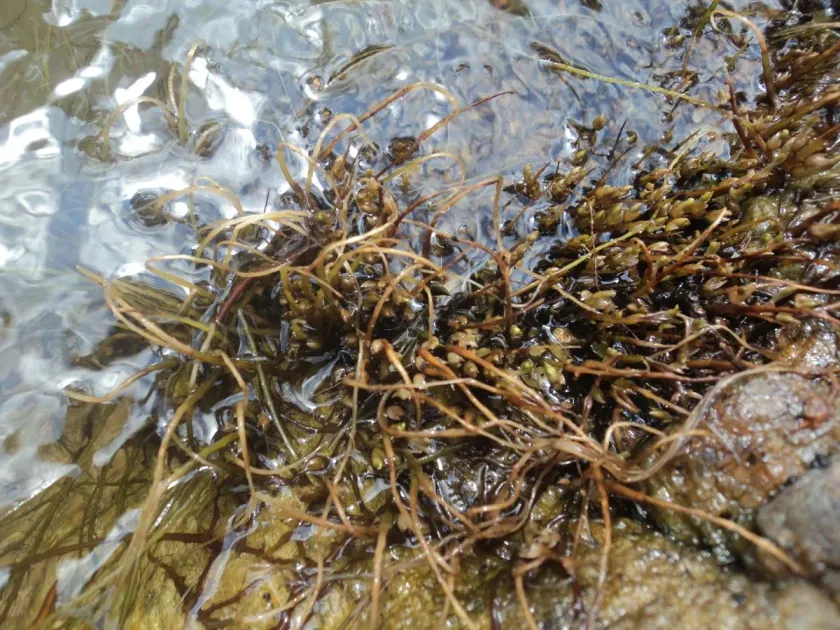
Podostemum elongatum belongs to the fascinating Podostemaceae family, a group of aquatic plants that have evolved to thrive in fast-flowing river rapids. These plants are uniquely adapted to attach themselves firmly to rocks, resisting the constant force of water currents.
The morphology of this plant is highly specialized, with a thallus-like structure that helps it survive in turbulent environments. It does not require soil in the traditional sense, obtaining nutrients directly from the water column through its specialized root-like organs.
To successfully exist, Podostemum elongatum requires clean, highly oxygenated water. It acts as a sensitive bioindicator, as it cannot survive in stagnant, polluted, or nutrient-overloaded waters that typically follow agricultural runoff.
The species prefers consistent tropical to subtropical temperatures, where the river systems provide a stable flow throughout the year. Its biological development is strictly synchronized with the hydrological cycle of the river, allowing it to complete its life cycle even in shifting water levels.
Although it is not a commercial crop for agricultural harvest, the study of Podostemum elongatum provides critical insights into bioengineering and sustainable water management. Its ability to colonize rock surfaces makes it a subject of interest for ecological restoration projects.
Main diseases and pests
The primary threat to Podostemum elongatum is the fragmentation of river habitats. Construction of dams and reservoirs significantly reduces flow velocity, which is fatal to the growth of this specific rheophytic species.
Agricultural and industrial pollution poses a significant risk. Increased chemical loads, such as pesticides and excessive fertilizers, cause shifts in water quality that lead to the rapid decline of sensitive aquatic colonies.
Habitat destruction resulting from riverbed mining and dredging removes the necessary rocky substrate upon which this plant must anchor. Without stable anchorage, the population cannot regenerate in its natural environment.
Climate change effects, including prolonged droughts and extreme weather patterns, lead to the periodic drying of riverbeds. Podostemum elongatum is unable to tolerate extended exposure to air, making it extremely vulnerable to habitat loss.
Currently, there are no commercial pests associated with the cultivation of this plant, as it remains a wild-growing species. Conservation strategies focus primarily on habitat protection and monitoring river health to prevent the extinction of this rare plant.