
Plumeria obtusa
Plumeria obtusa L.
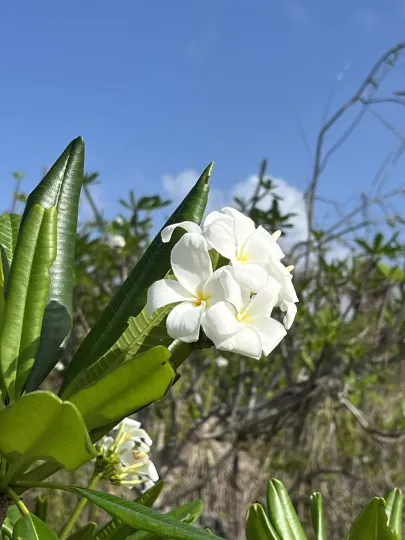
Description
Growing requirements
Plumeria obtusa, commonly known as the blunt-leaved frangipani, belongs to the Apocynaceae family. It is a native species to the Caribbean, Mexico, and Central America, characterized by its fragrant white flowers.
This species requires high light intensity and thrives in full sun exposure. In non-tropical regions, it must be grown in greenhouses or as a container plant to protect it from cold and freezing temperatures.
Optimal soil conditions include a well-draining, nutrient-rich substrate. The root system is prone to damage if the soil remains constantly wet, so drainage holes in pots are strictly necessary.
Watering practices should be adjusted according to the season. During the active growing phase, regular watering is required, while in the winter dormancy period, the plant needs very little hydration.
Agricultural use of Plumeria obtusa is primarily focused on the ornamental industry and the production of aromatic essences for cosmetics and traditional floral adornments.
Main diseases and pests
The primary pests affecting this plant include spider mites and mealybugs, which tend to infest leaves and stems, particularly in stagnant, warm air conditions.
Fungal diseases like root rot are frequent when agricultural practices fail to account for proper substrate moisture, leading to systemic decay of the plant.
Regular inspection of the leaf axils and the undersides of the foliage is necessary to detect early stages of pest colonization before they become severe.
Chemical control involving horticultural oils or systemic insecticides may be employed, but it is important to test on a small area to avoid leaf burn.
Cultural prevention includes maintaining good spacing between plants to improve airflow and strictly limiting water during the plant's natural dormant season.