
Platostoma palustre
Platostoma palustre (Blume) A. J. Paton
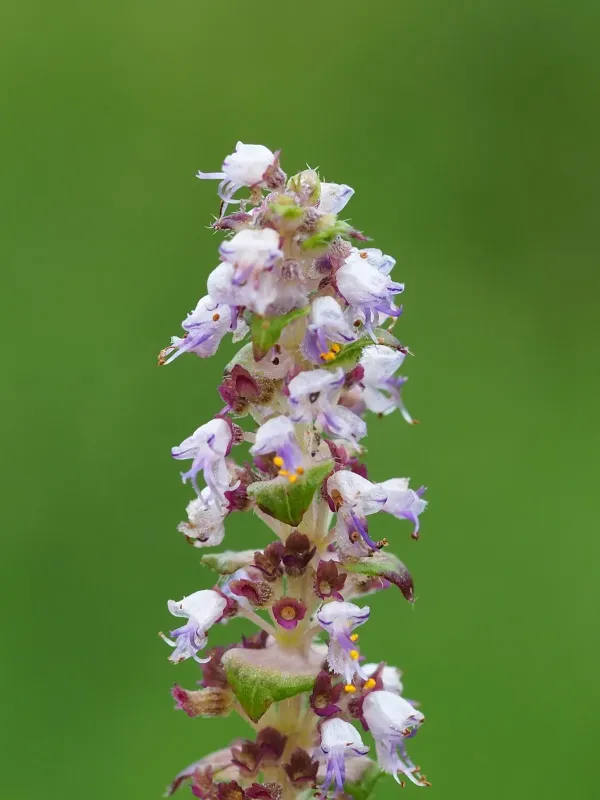
Description
Sowing dates
Platostoma palustre is a tropical species that requires a long and warm growing season. In temperate climates, seeds should be started indoors in late winter to ensure they are ready for planting once the weather warms.
The seeds are exceptionally small and require light for germination. They should be sown on the surface of a fine, moist potting mix and lightly pressed down without covering them with soil.
Germination typically occurs within two weeks when temperatures are maintained between 22 and 25 degrees Celsius. Keeping the humidity high during this period is essential for successful seedling emergence.
Seedlings should be hardened off before transplanting them into the field. This process involves gradually exposing them to outdoor conditions over a week to prevent transplant shock.
Optimal spacing is crucial; plants should be spaced at least 30 centimeters apart to allow for vigorous branching and to prevent diseases caused by high humidity in dense canopies.
Growing requirements
As a member of the Lamiaceae family, this plant is native to marshy or moist environments in Southeast Asia. It thrives in soils that are rich in organic matter and have high water retention capacity.
Platostoma palustre demands consistent soil moisture. It is best suited for areas with high rainfall or managed irrigation systems where the soil can be kept damp throughout the growing season.
Light requirements include full sun to partial shade. In extremely hot climates, some shade during the hottest part of the day prevents leaf scorching and maintains higher levels of aromatic compounds.
The plant is highly sensitive to cold and will stop growing or die if temperatures fall below 15 degrees Celsius. It should only be grown outdoors during the frost-free season.
Soil pH should be slightly acidic to neutral for best nutrient availability. Supplemental fertilization with organic compost or balanced fertilizers ensures lush foliage growth.
Yield
The economic yield of the crop consists of the aerial parts, primarily the leaves and tender stems, which are harvested for their mucilaginous and aromatic properties.
Yield can be significantly increased by implementing a regular pruning regimen, which forces the plant to develop a bushier habit, thereby increasing the total amount of biomass harvested.
Proper nutrient management, particularly nitrogen application during the vegetative phase, helps in maximizing the production of healthy, green foliage suitable for processing.
Harvest frequency is determined by growing conditions; in warmer regions, two or even three cuts per season can be achieved if the plants are given enough time to recover.
Successful yields depend on preventing competitive stress from weeds, which can drastically reduce the growth rate of this herb if left uncontrolled during the early stages of development.
Main diseases and pests
Fungal pathogens such as root rot and stem mold are the most common threats to Platostoma palustre. These diseases are largely caused by waterlogged soil and poor airflow around the plants.
Pests like aphids and spider mites can attack the plants during dry spells. These infestations lead to curled or yellowing leaves and can weaken the plant, making it more susceptible to infections.
Integrated pest management, including the use of neem oil or other biological controls, is highly recommended to manage pest populations without contaminating the medicinal foliage.
Crop rotation is essential for the long-term health of the soil. Growing the same plant on the same plot repeatedly can lead to a buildup of soil-borne diseases that are difficult to manage.
Mechanical weed control is preferred over chemical herbicides, as the chemical residues can be absorbed by the leaves, impacting the quality and safety of the final product.
Harvesting
Harvesting usually takes place when the plant starts to bloom. At this stage, the concentration of active substances and essential oils within the leaves is at its peak.
Plants are cut back to approximately 10-15 centimeters above the ground. This regenerative pruning allows for healthy regrowth, provided the plant is watered and fertilized shortly after the harvest.
The harvested material must be dried immediately in a shaded, well-ventilated area. Rapid, indirect drying is critical to preserve the aromatic qualities and the deep color of the leaves.
Proper storage is essential to maintain quality. Dried leaves should be stored in opaque, airtight containers away from humidity and high temperatures to prevent the loss of potency.
The primary use of the harvested crop is the production of "grass jelly," a popular, healthy dessert known for its refreshing and cooling properties, widely appreciated in many Asian cultures.