
Saltmarsh ribbonwood
Plagianthus divaricatus
Description
Growing requirements
Saltmarsh ribbonwood (Plagianthus divaricatus) is a distinctive member of the Malvaceae family, native to the coastal regions of New Zealand. This semi-deciduous shrub has evolved to thrive in environments that are typically hostile to most other agricultural crops.
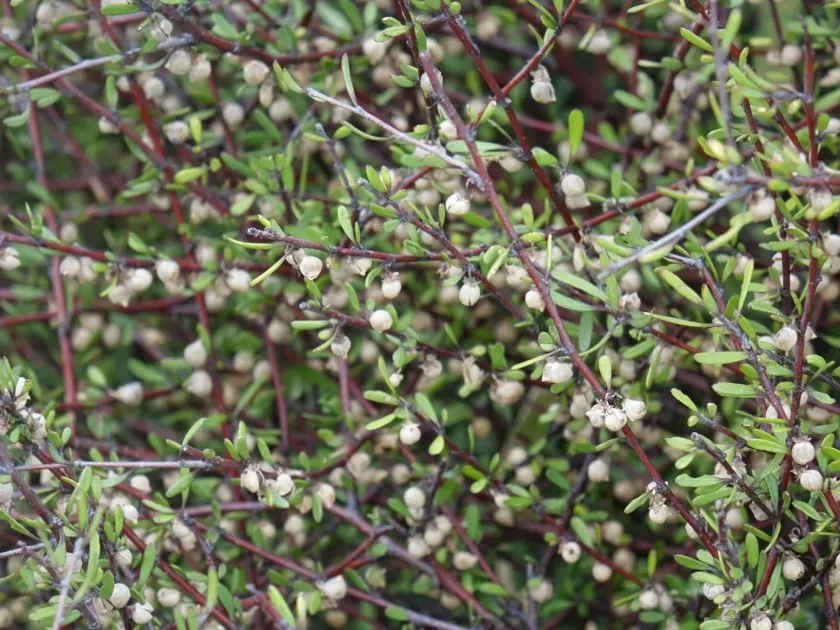
The botanical structure of this plant consists of intricately interlaced, wiry branches, providing exceptional resistance to coastal winds. Its small, narrow leaves are specialized to withstand high salinity levels, making it a true halophyte capable of growing in salt marsh habitats.
The culture requires specific conditions, including direct sunlight and well-drained, yet consistently moist soils. It is particularly valued in agronomy for its ability to stabilize shorelines and reclaim saline-affected lands through natural phytoremediation processes.
Climate requirements for successful cultivation include mild winters, as the plant can suffer from severe frost damage if not properly acclimated. In its native range, it is accustomed to oceanic climates with high humidity and consistent maritime exposure.
Host-plant utility focuses on coastal land management and erosion control. Its presence creates vital habitats for local biodiversity while providing a physical barrier against soil runoff in fragile estuarine zones.
Main diseases and pests
Common threats to the plant include root rot, which typically occurs in waterlogged soils with poor drainage. Maintaining an oxygen-rich root zone is essential to prevent the colonization of pathogenic fungi in the soil medium.
Pests, such as aphids and scale insects, frequently target new growth during the spring flush. These pests can weaken the plant's structural integrity if left unmanaged, though the plant is generally robust once established.
Powdery mildew can become an issue in environments with low airflow and high humidity. Proper spacing between individual plants is a standard agricultural practice to minimize the risk of disease spread in plantation setups.
Nutrient toxicity, particularly from excessive chemical fertilizers, can be lethal to the plant's delicate salt-balance mechanisms. Growers are advised to avoid high-nitrogen fertilizers that promote lush, weak growth susceptible to pests.
Environmental stress, such as sudden shifts in salinity levels, can occasionally lead to premature leaf drop. Consistent monitoring of soil conditions is necessary to ensure the plant remains in an optimal physiological state for survival.