
Pittosporum tobira
Pittosporum tobira (Thunb.) W. T. Aiton x Pittosporum heterophyllum Franch.
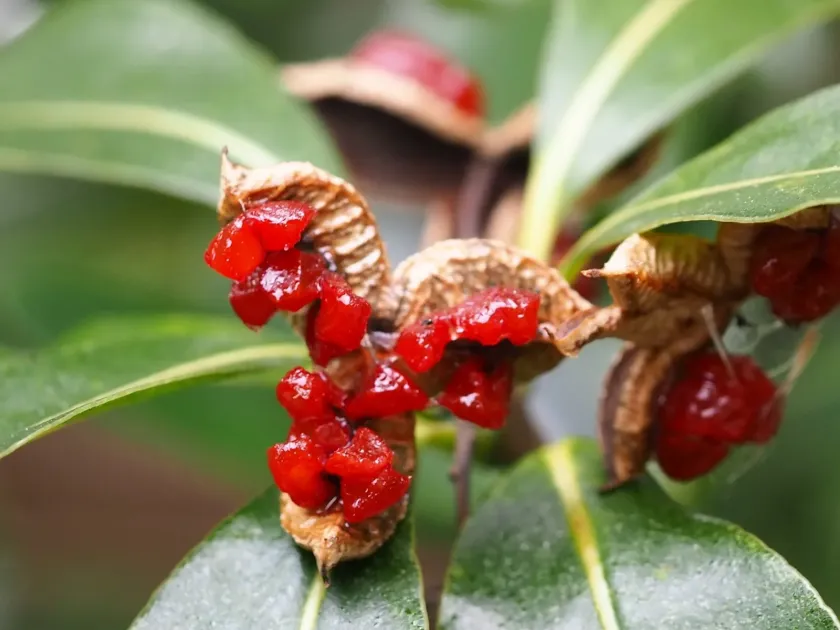
Description
Growing requirements
Pittosporum tobira, belonging to the Pittosporaceae family, is a highly popular evergreen shrub known for its leathery, glossy foliage and fragrant, orange-like white flowers. It is widely prized for its durability in landscape design.
Originally native to Eastern Asia, including Japan and China, this species is now a staple of subtropical gardens worldwide. It is cultivated in coastal regions where the climate remains frost-free or provides only mild winter conditions.
The cultivation of this shrub requires well-draining soil with a pH ranging from neutral to slightly acidic. While it thrives in full sun, it can also adapt to partial shade, making it a versatile option for various garden environments.
Agronomic management involves regular irrigation during the initial establishment phase, after which the shrub becomes significantly drought-tolerant. Periodic pruning is essential to maintain the desired shape and density of the canopy throughout the growing season.
Its primary use is ornamental, serving as an excellent choice for hedge formation, privacy screens, or container gardening. The cut branches are also frequently utilized by florists due to their long vase life and pleasant aroma.
Main diseases and pests
Mealybugs are one of the most common pests affecting Pittosporum tobira. They settle in the axils of the leaves, drawing sap from the plant and potentially leading to the development of sooty mold on the foliage.
Aphid infestations are frequently observed on new, tender shoots during the spring. Effective control can be achieved through regular monitoring and the application of horticultural oils or targeted insecticidal soaps.
Scale insects present a more persistent challenge, often going unnoticed until the plant shows signs of chlorosis. Physical removal or systemic insecticides are required to manage larger colonies and protect the shrub's health.
Leaf spot diseases may occur when there is inadequate airflow or prolonged high humidity. Ensuring proper spacing between plants and avoiding overhead irrigation can significantly reduce the risk of fungal infections.
Root rot is typically associated with poor drainage conditions. To maintain a healthy root system, it is vital to ensure the soil is allowed to dry out slightly between waterings, preventing the onset of anaerobic conditions.