
Japanese cheesewood
Pittosporum tobira (Thunb.) W. T. Aiton
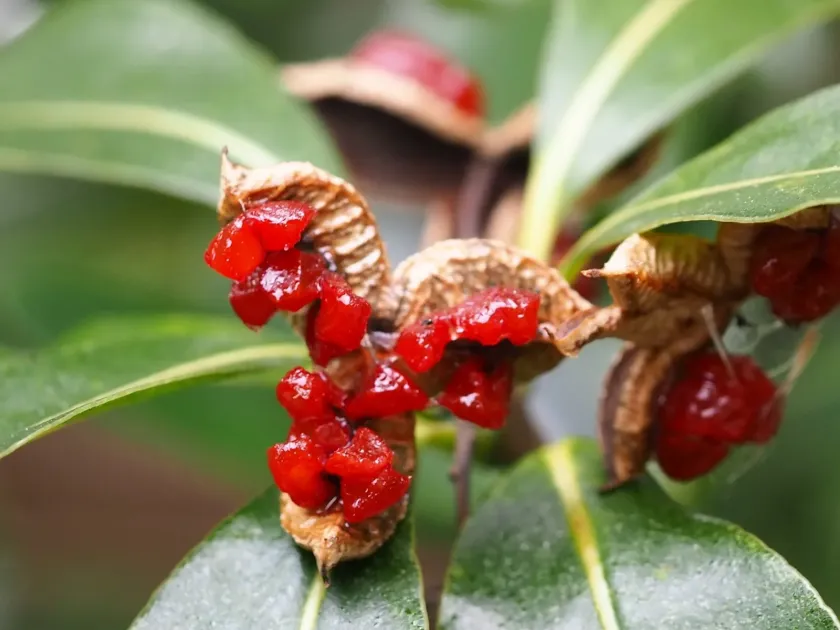
Description
Growing requirements
Pittosporum tobira, known commonly as Japanese cheesewood, belongs to the family Pittosporaceae. Originating from East Asia, this hardy evergreen shrub has become a staple in Mediterranean and subtropical landscaping worldwide.
The plant features glossy, leathery, obovate leaves that are arranged in whorls. Its fragrant, creamy-white flowers bloom in terminal clusters, making it a highly valued specimen for both its foliage and aromatic properties.
It thrives in well-drained, moderately fertile soil with a slightly acidic to neutral pH. It is crucial to ensure that the planting site has excellent drainage, as the roots are susceptible to rot if kept in waterlogged conditions.
This species prefers full sun to light shade. While it has some drought tolerance once established, it benefits from regular watering during hot summer months to maintain its deep green foliage and promote flowering.
In landscaping, it is used for hedging, topiary, or as a focal shrub in garden beds. Due to its robustness, it is frequently used in coastal regions as it possesses a high tolerance for salt spray and wind.
Main diseases and pests
Common pests include scale insects and mealybugs, which often cluster on the stems and undersides of leaves. Horticultural oils or systemic insecticides are usually effective in managing these infestations.
Aphids can be a problem during the spring growth phase. They extract sap from soft tissue, leading to stunted growth; physical removal or insecticidal soap applications are recommended for control.
Fungal leaf spot diseases can occur in humid environments with poor air circulation. Proper spacing between plants and selective pruning to thin the canopy are effective preventative cultural practices.
Root rot is the most serious threat, caused primarily by poor soil drainage. If the leaves begin to yellow and drop prematurely, the moisture levels in the root zone must be assessed immediately.
Maintaining a healthy environment through proper pruning, correct irrigation, and routine inspection is key to preventing major outbreaks of pests or diseases in a plantation of Pittosporum tobira.